Ändra språk:
Posted on

CHOOSING THE RIGHT LIFEJACKET FOR SAILING

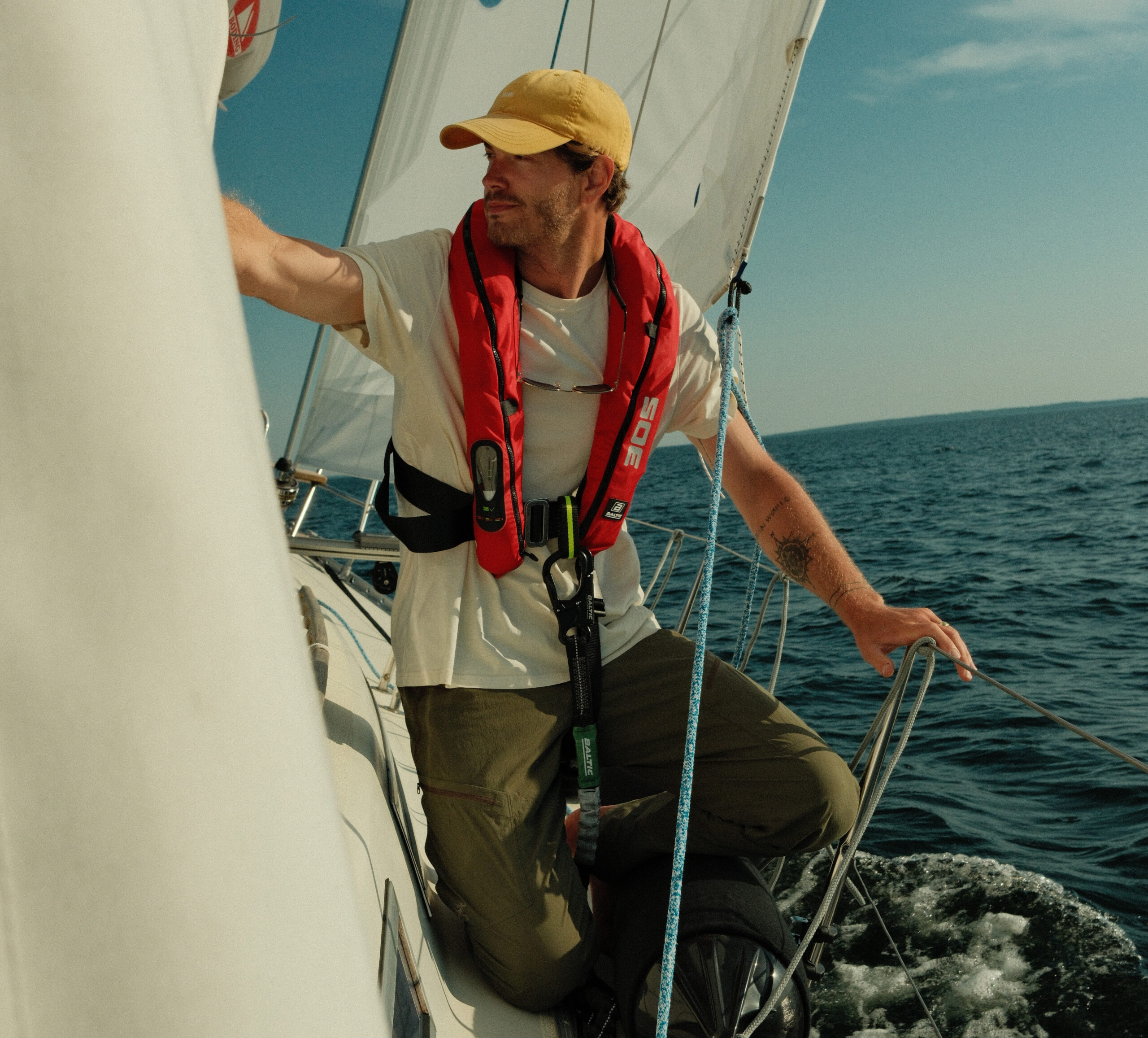
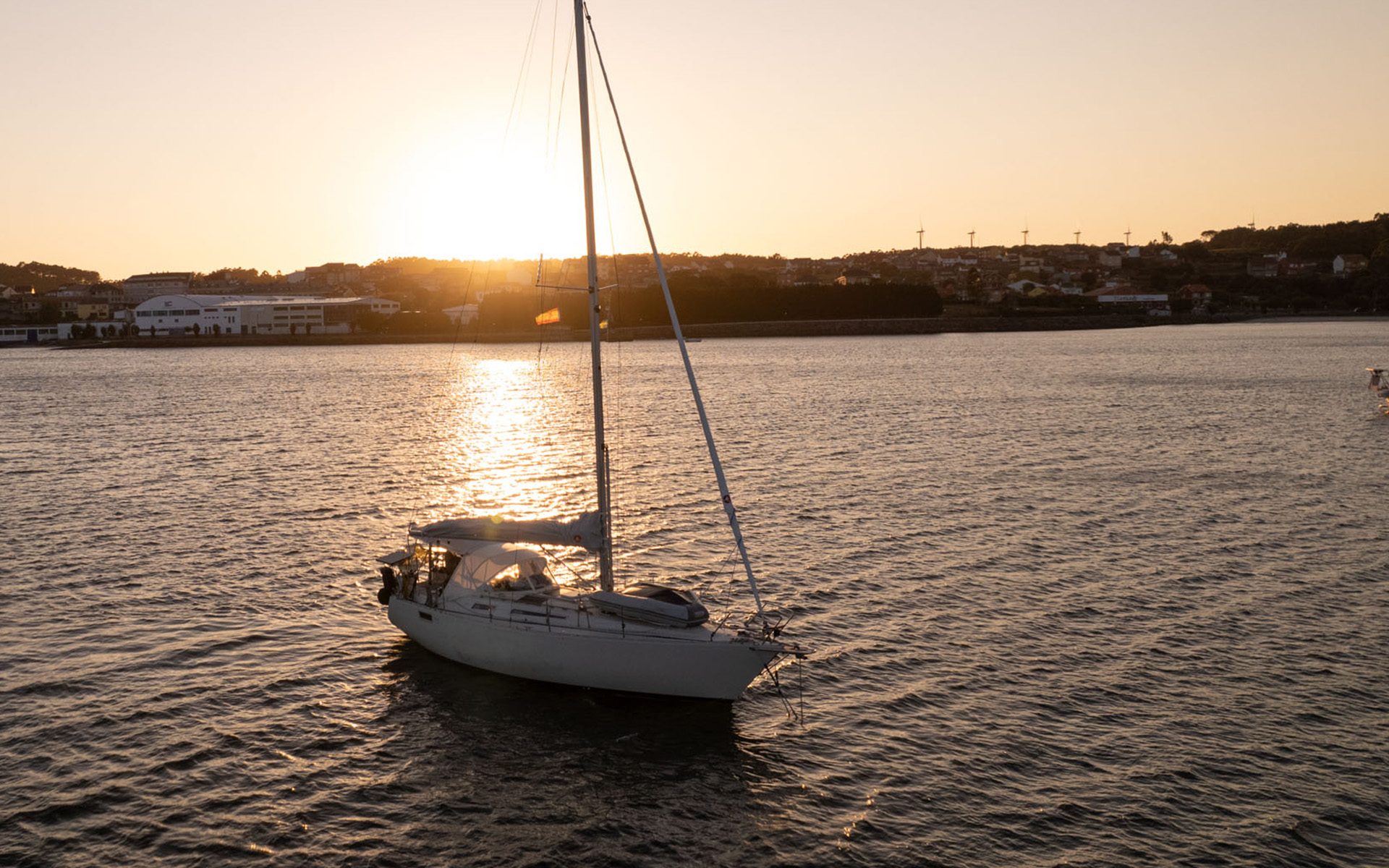
En segelbåt i solnedgången.

CHOOSE THE RIGHT LIFEJACKET FOR SAILING

Choosing the right lifejacket for sailing is essential for both safety and comfort on the water. Whether you are heading out for an evening sail in the archipelago or planning a longer journey, a sailing lifejacket is a natural and important part of your onboard equipment.

There are many different types, sizes, and designs of lifejackets for sailing, which can make the choice feel overwhelming. Below are some key things to consider when choosing a lifejacket.

LIFEJACKETS FOR DIFFERENT TYPES OF SAILING

Every sailing adventure is different, and so are lifejackets. When sailing, it’s important to choose a lifejacket that is designed for life on board. A sailing lifejacket offers good freedom of movement for the shoulders and upper body. This makes it easier to raise sails, handle ropes, and move safely around the boat. For dinghy sailing and more active sailing, flexibility and low weight are especially important. Longer trips often place higher demands on comfort and practical features.

Safety on the Water

Safety always comes first. All lifejackets from Baltic meet the requirement of at least 50N buoyancy, which is suitable for adults who can swim in sheltered waters. If you sail longer distances or spend time in more open waters and tougher conditions, a lifejacket with higher buoyancy is a wise choice. In these situations, an inflatable lifejacket is often a very good option.

For children and people who cannot swim, a lifejacket with at least 100N buoyancy is always recommended. These jackets help keep the wearer on their back with the airways above the water, which greatly increases safety.

💡 GOOD TO KNOW:Some models are specially designed for more demanding sailing, such as our SLA lifejackets. These often include extra features like a sprayhood, emergency light, and AIS attachment, and are approved according to World Sailing Offshore Special Regulations (OSR). This means they meet strict safety requirements for offshore sailing and longer distances from land, perfect if you want extra peace of mind at sea.

FIT – FOAM OR INFLATABLE LIFEJACKETS

A proper fit is crucial for the lifejacket to work as intended, whether you choose a traditional foam lifejacket or an inflatable model. The jacket should feel secure on the body without being bulky or restrictive.

  • Foam lifejackets should offer the right balance of comfort, ventilation, and freedom of movement.
  • Inflatable lifejackets should sit stable and comfortable even when not inflated.

Many lifejackets are available with or without an integrated safety harness. The harness allows you to attach a safety line and adds extra security, especially when moving on deck in rough conditions. Lifejackets without a harness can be more flexible and easier to adjust, which can be a good choice for motorboating.

Key Features to Look For

Just like other equipment, lifejackets come in both simple and more advanced versions. Think about which features best suit your type of sailing:

  • Pockets: For a phone, energy bars, or other small items.
  • Crotch straps: Help keep the jacket in place, especially important for children and in rough conditions.
  • Safety harness: For attaching a safety line and increasing safety on board, especially on sailboats and in rough seas.
  • SLA: Models with extra equipment such as sprayhood, emergency light, and AIS attachment, approved according to World Sailing OSR.
  • Inflatable lifejacket: High buoyancy with low weight and excellent freedom of movement.
  • Reflectors and whistle: Increase visibility in an emergency.

The best lifejacket is always the one that is actually worn. Choose one that suits your sailing, wear it on board, and enjoy your time on the water.
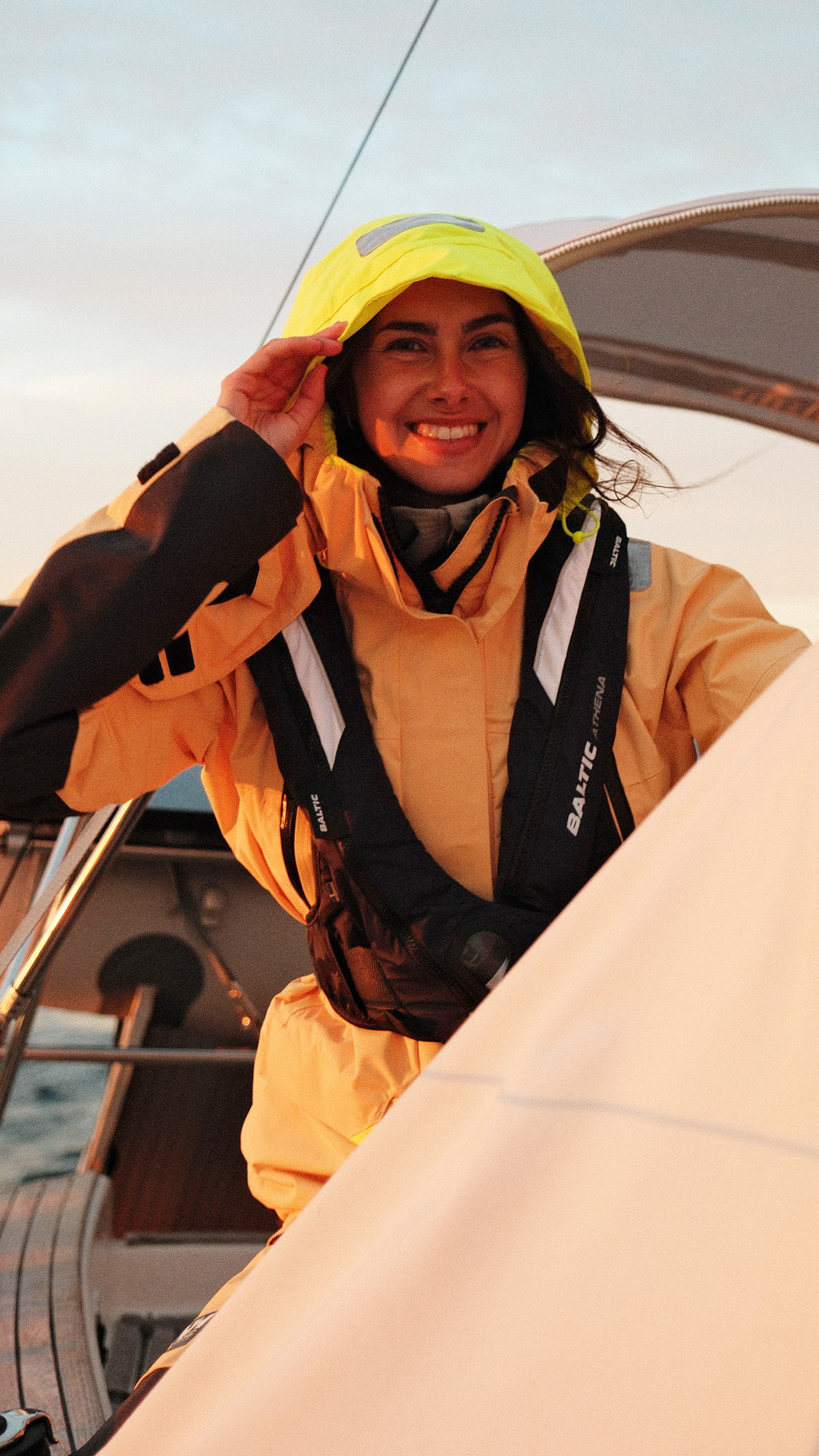
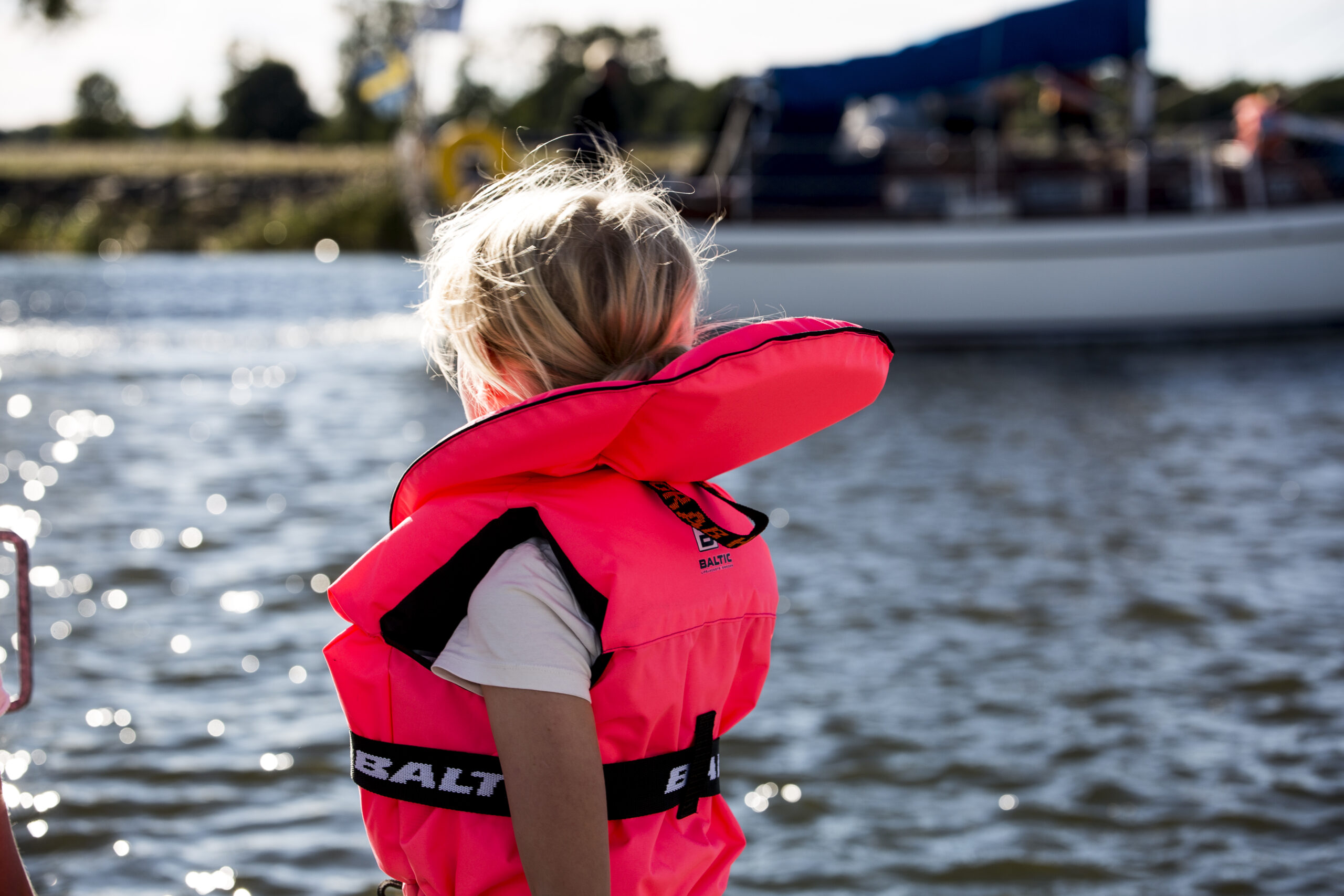
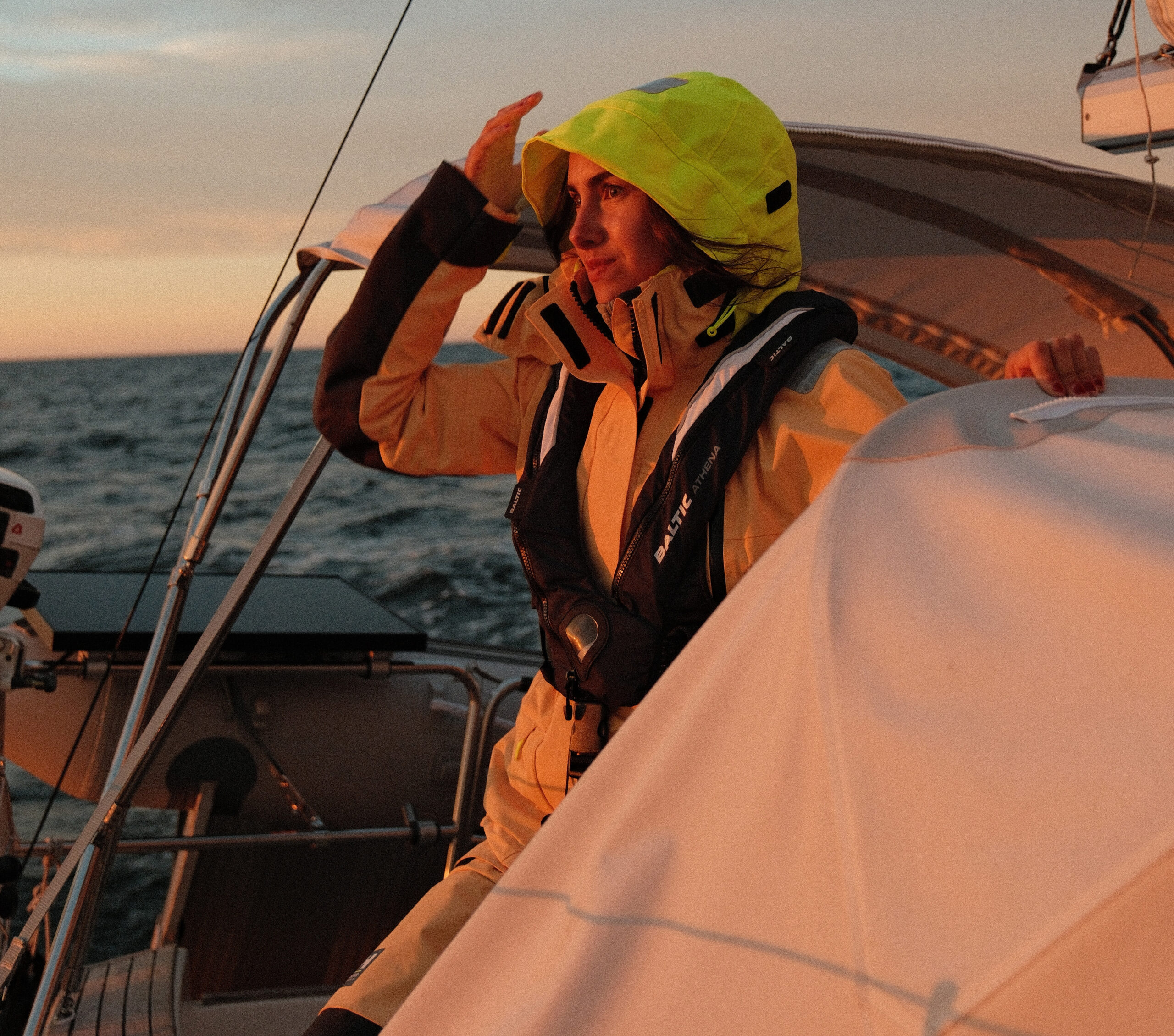
A smiling girl looking out over the sea from a sailing boat.

Dinghy Sailing

In a dinghy, freedom of movement is everything. Our lifejackets for dinghy sailing are light, flexible, and sit close to the body without getting in the way. Easy adjustments and a smart fit allow you to focus fully on sailing and having fun on the water.

Offshore Sailing

On open water and longer passages, extra safety is essential. Our offshore lifejackets are robust, offer high buoyancy, and include features that increase safety in tougher weather. Comfort and stability help you stay focused on sailing, even when the waves are high.

Leisure Sailing

On holiday, it’s all about feeling safe and comfortable on board. Our lifejackets for leisure sailing are easy to use, comfortable to wear all day, and provide natural freedom of movement, whether you are sailing with family, friends, or enjoying a relaxed trip along the coast. Easy to put on. Easy to enjoy.
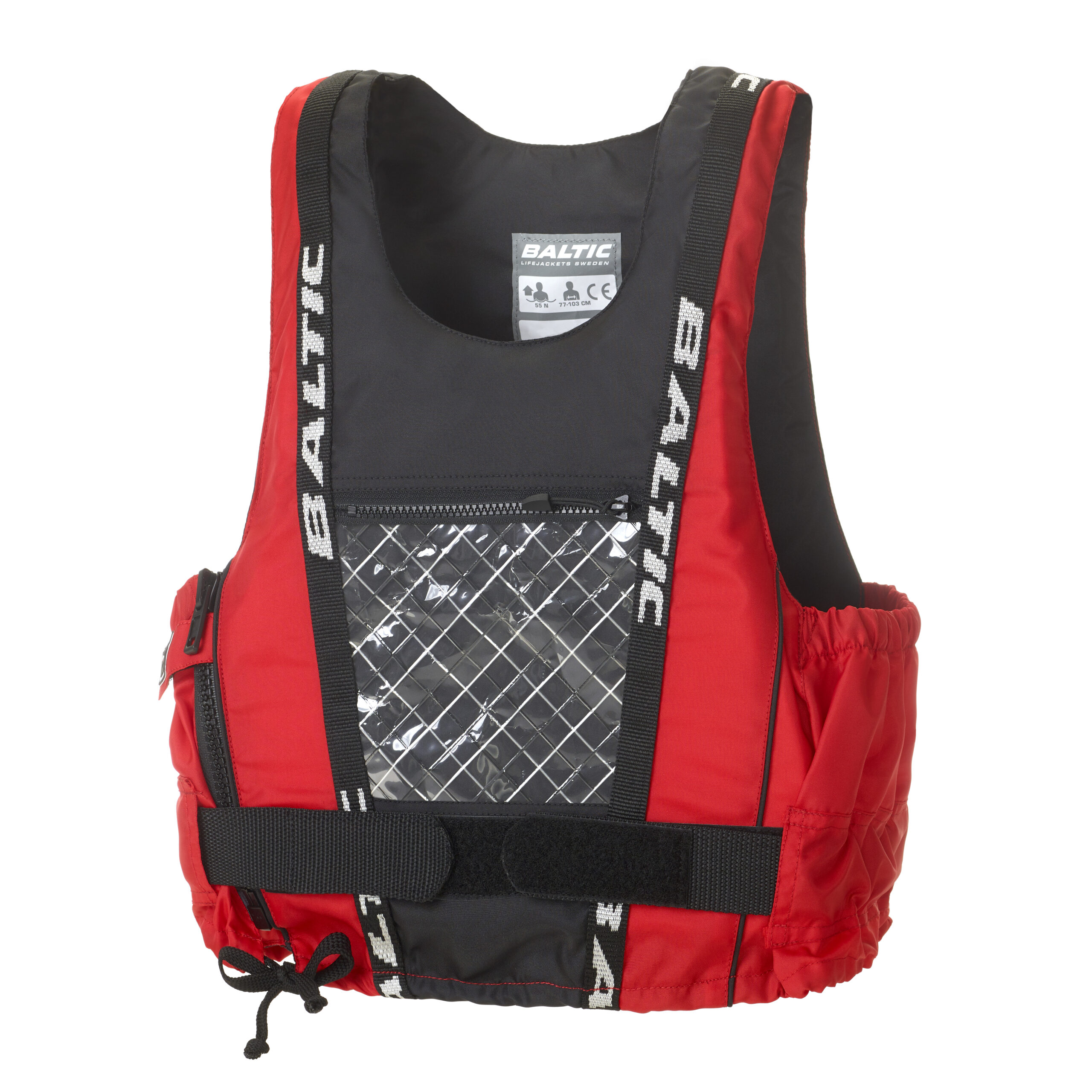
Dinghy Pro lifejacket for dinghy sailing.

DINGHY SAILING

DINGHY PRO

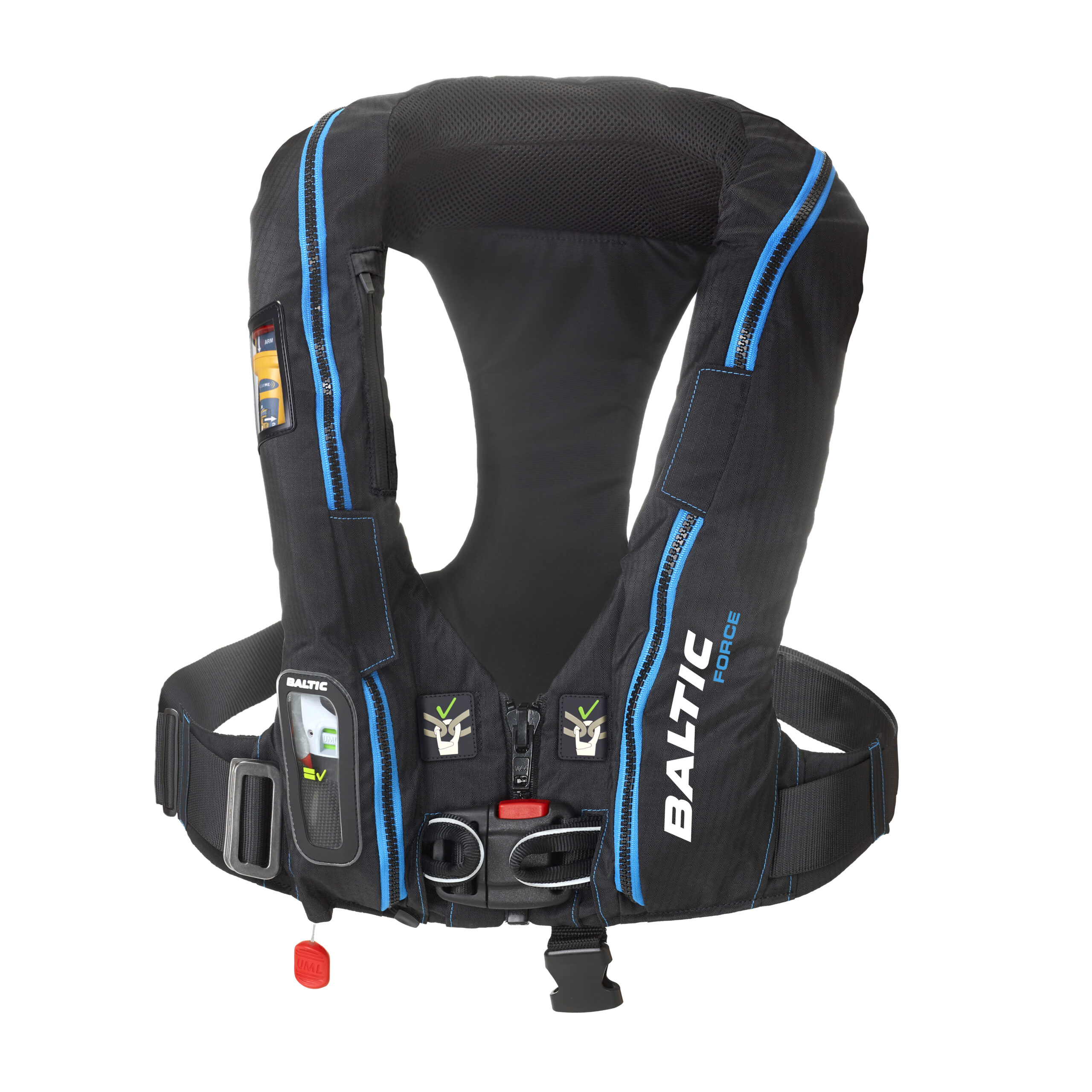
Force 190 Sele SLA flytväst

OFFSHORE

FORCE 190 SELE SLA 

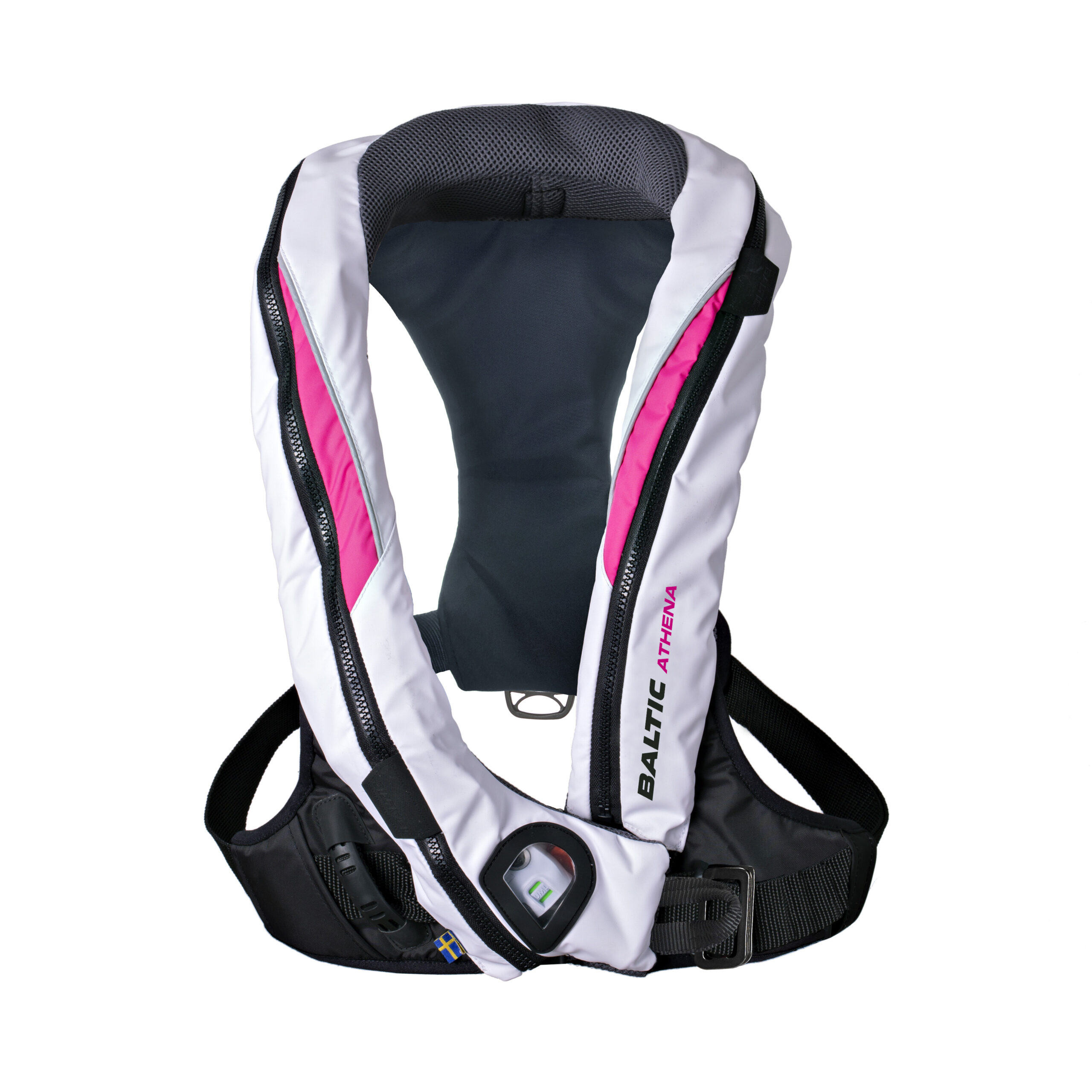
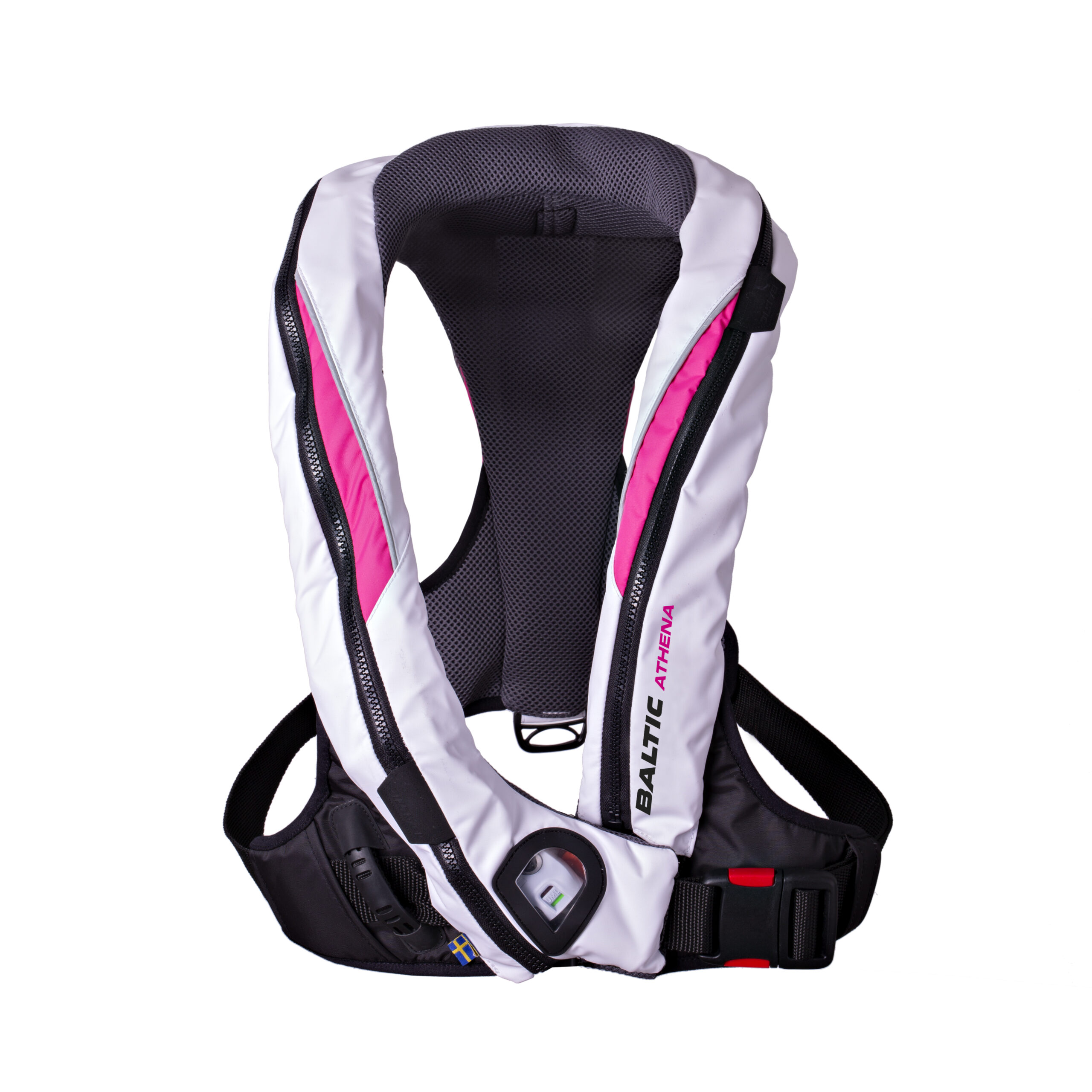
Baltic Lifejackets Athena sele

LEISURE SAILING

ATHENA 165 SELE
Posted on

STAYING SAFE ON THE WATER IN COLD WEATHER

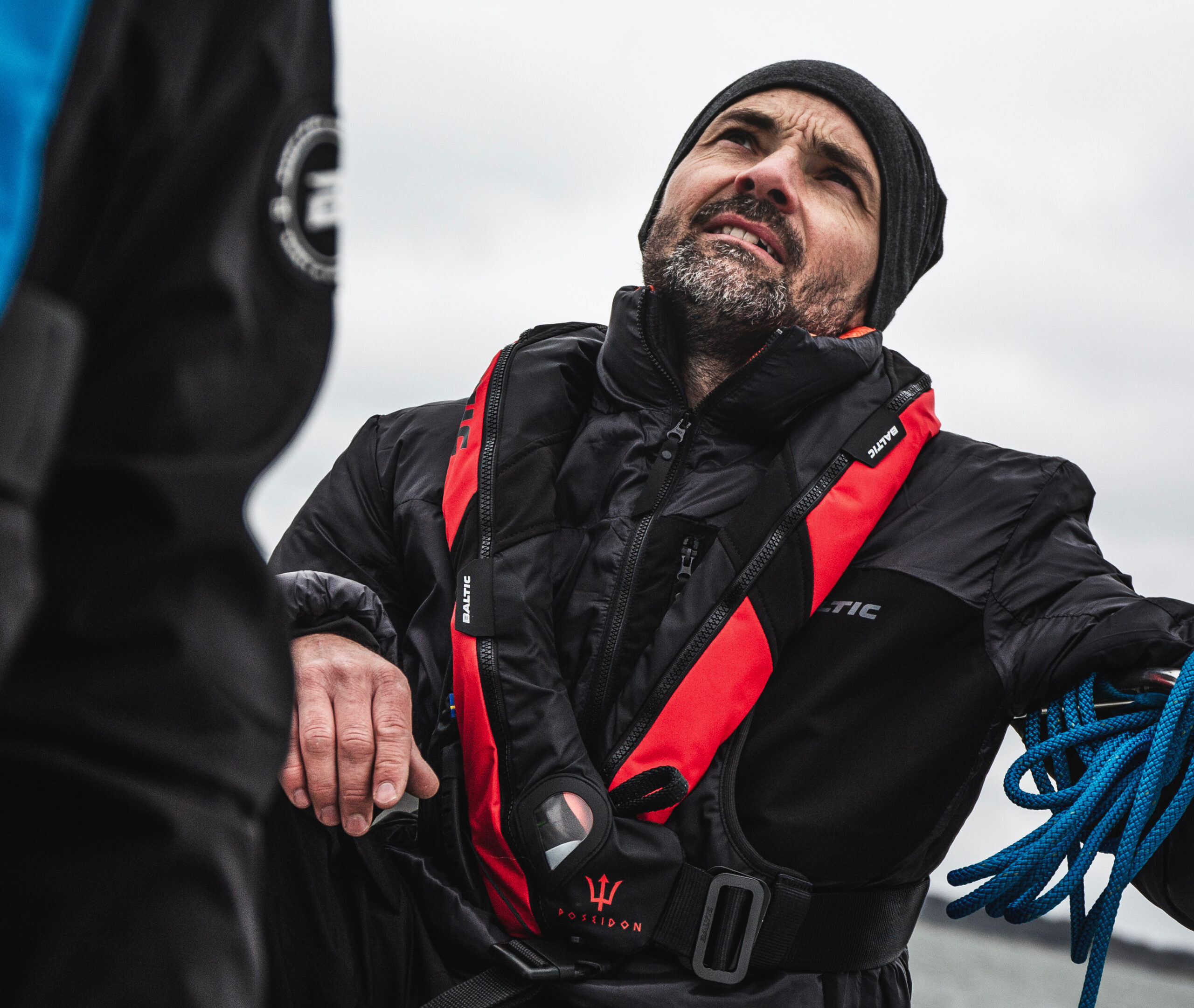
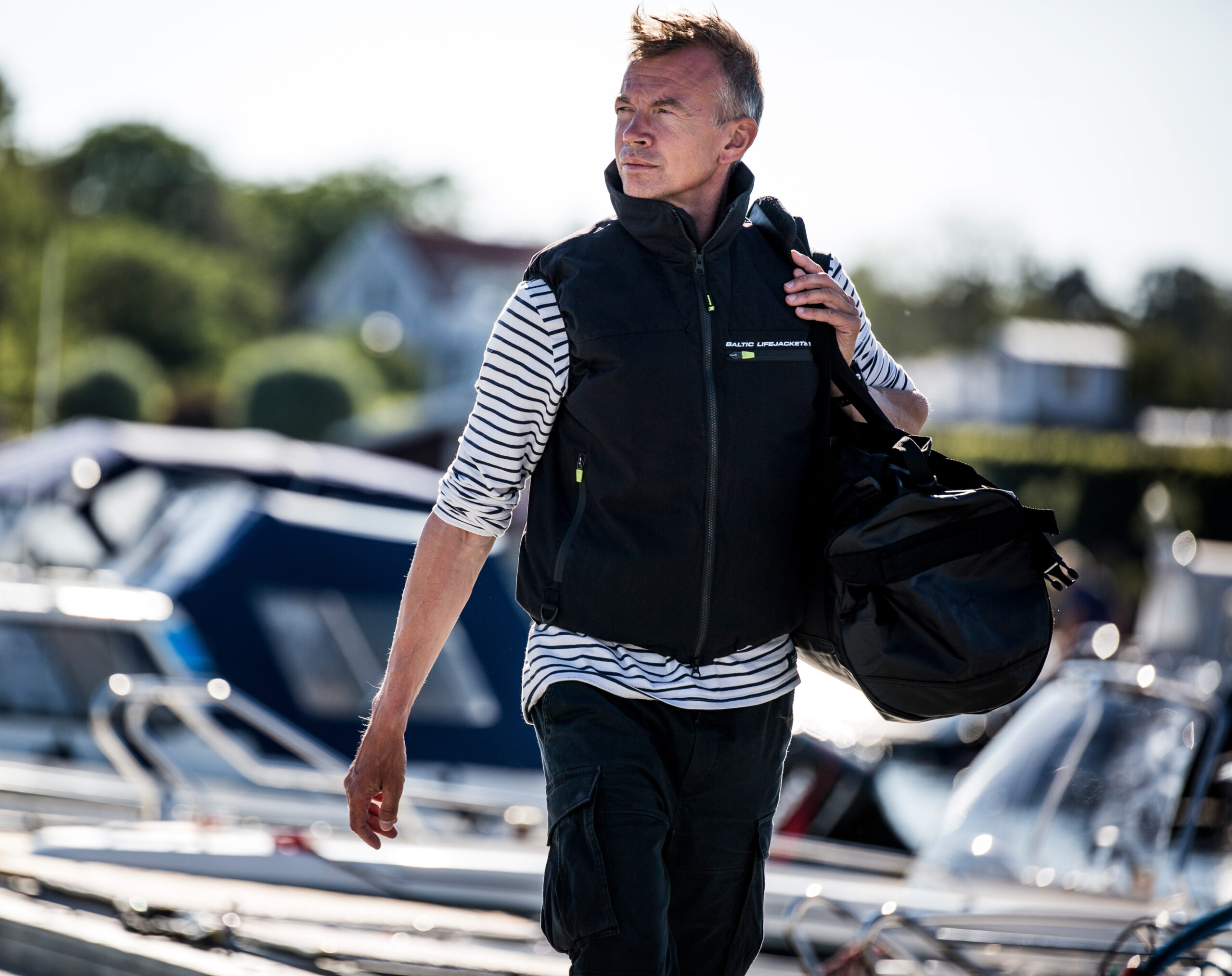
En man med röd flytväst och svarta kläder sitter på en båt.

Safe boating in colder weather

Cold days on the water can be magical – the crisp air, the quiet, and the low winter sun make it a special experience. But when the temperature drops, the rules change. Cold water, quick weather shifts and heavier clothing all demand more planning and awareness. Here are our best tips to help you enjoy the season safely.

COLD WATER SAFETY

Cold water is one of the biggest risks during the colder months. When the temperature drops below 15°C, the body loses heat quickly and movement and judgement are affected within minutes. That’s why it’s important to always wear a lifejacket or flotation clothing. Let someone know where you’re going and pack spare clothes in a waterproof bag.

💡 SAFETY TIP: When it gets colder, we wear more layers — but thicker clothing also weighs more in the water, reducing buoyancy. Choose an inflatable lifejacket instead of a 50N foam vest during this season. It provides better buoyancy without limiting your movement.

Simple steps that make a big difference:

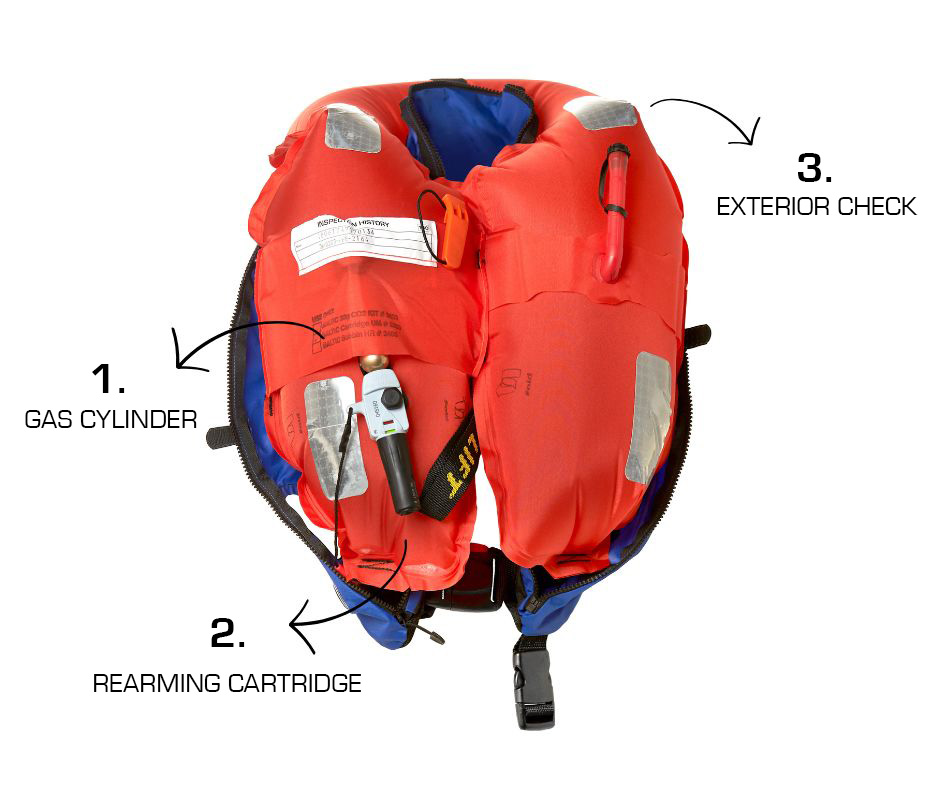
  • Check the gas cylinder and rearming cartridge if you’re using an inflatable lifejacket.
  • Make sure the whistle and reflective patches are in place.
  • Test zippers and buckles to ensure they’re working properly.
  • Check that the vest fits well and provides enough buoyancy.
  • Rinse your lifejacket in fresh water after use and let it dry before storage.

A well-maintained lifejacket gives you confidence and freedom to enjoy your time on the water. Being prepared can truly save lives.

DRESS RIGHT FOR COLDER WEATHER

When the temperature drops, function and comfort matter more than ever. It’s not just about staying warm — it’s about staying safe and being able to move freely.

Follow the layering principle:

  1. Base layer – wicks away moisture.
  2. Mid layer – provides insulation and warmth.
  3. Outer layer – protects against wind, rain and spray.

If you fish, drive a boat or work close to the water, a flotation suit is a great choice. It keeps you warm, dry and buoyant without feeling bulky.

SAFETY ALL YEAR ROUND

Cold weather doesn’t mean you have to take a break from boating. With the right preparation, gear and planning, you can enjoy the freedom of the water — all year round.

Baltic’s lifejackets and flotation clothing are designed to perform in every season. Built to handle wind, rain and salt, they combine comfort, mobility and safety – so you can focus on the experience, not the conditions.

Poseidon uppblåsbar flytväst blå.

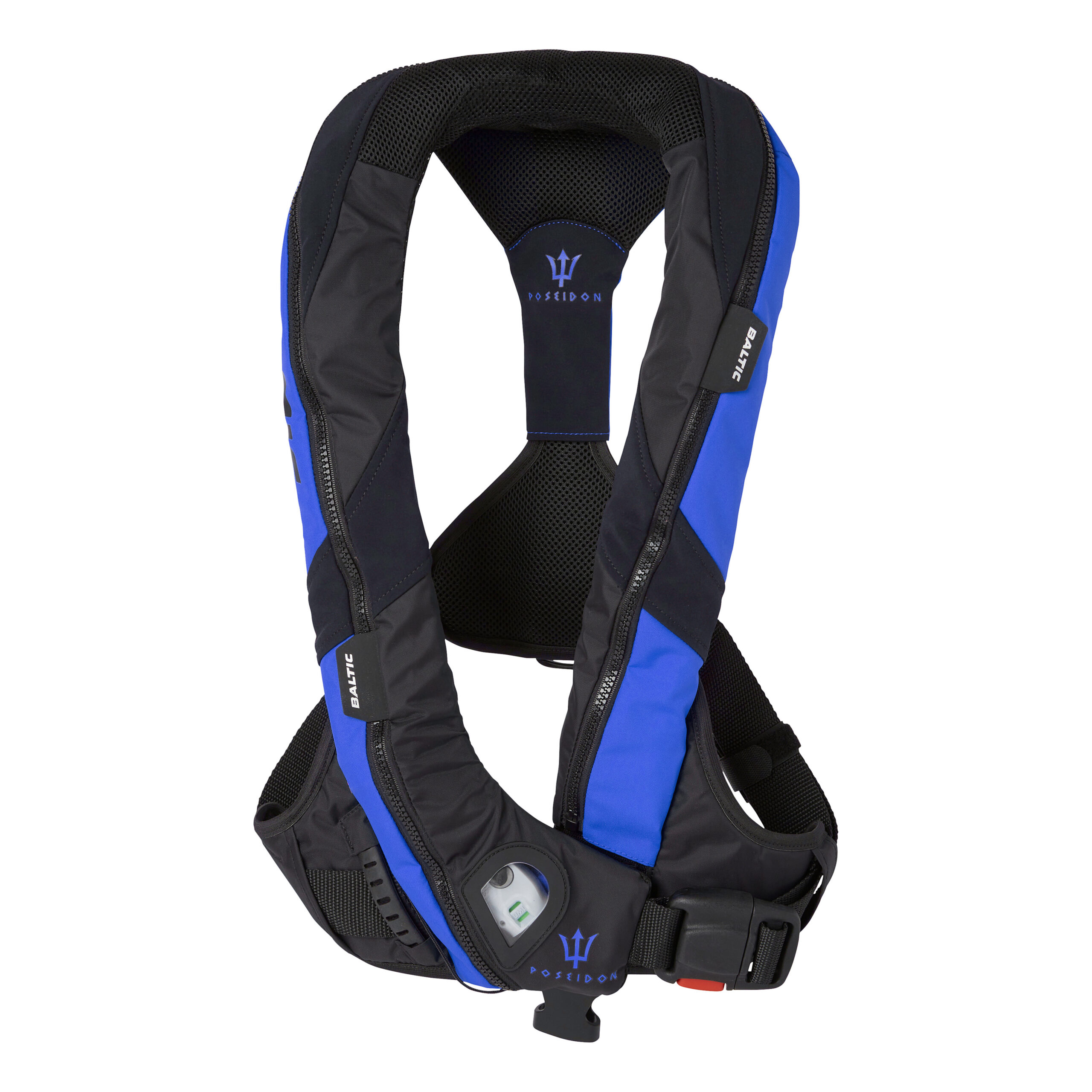
POSEIDON AUTO LIFEJACKET

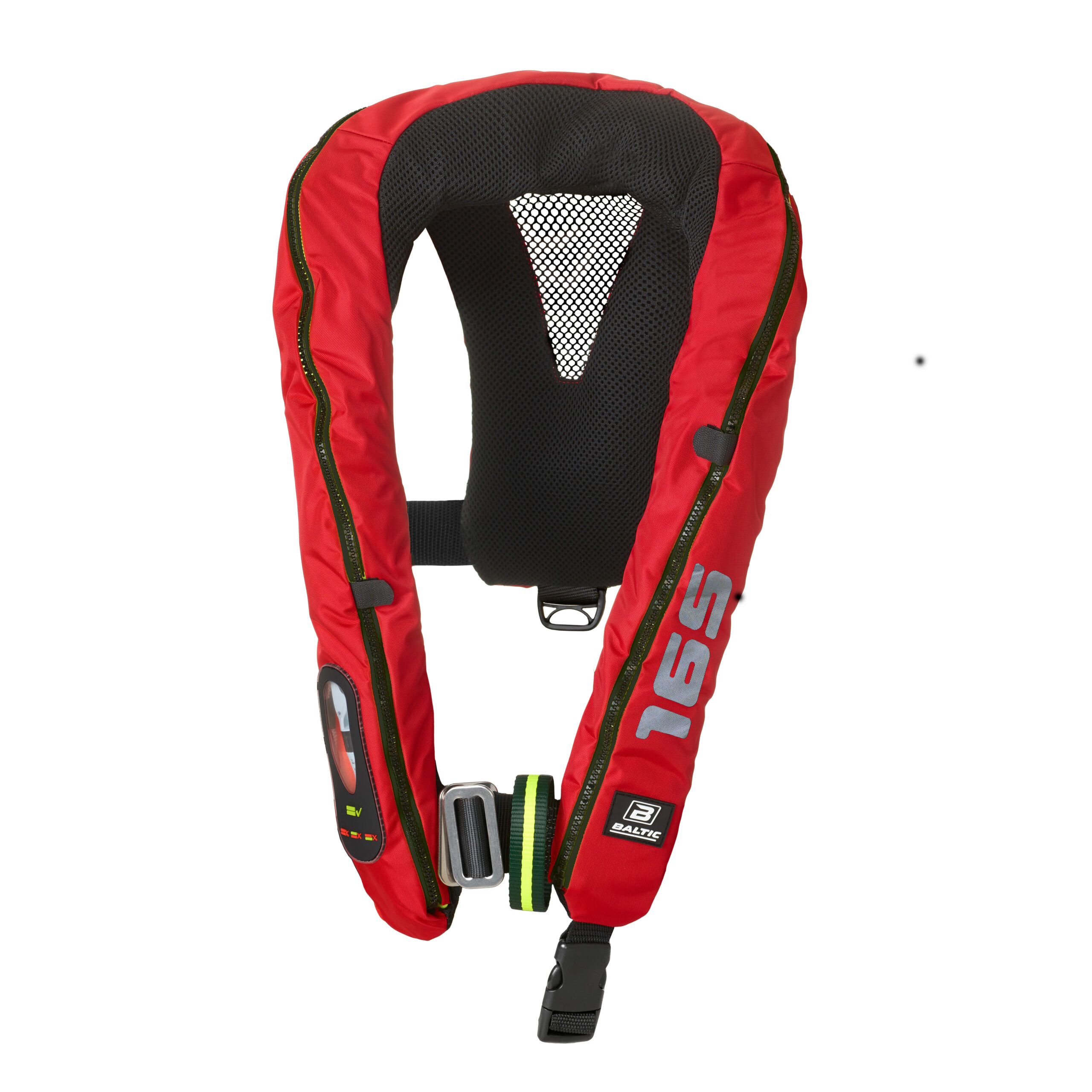
LEGEND 165 HARNESS LIFEJACKET

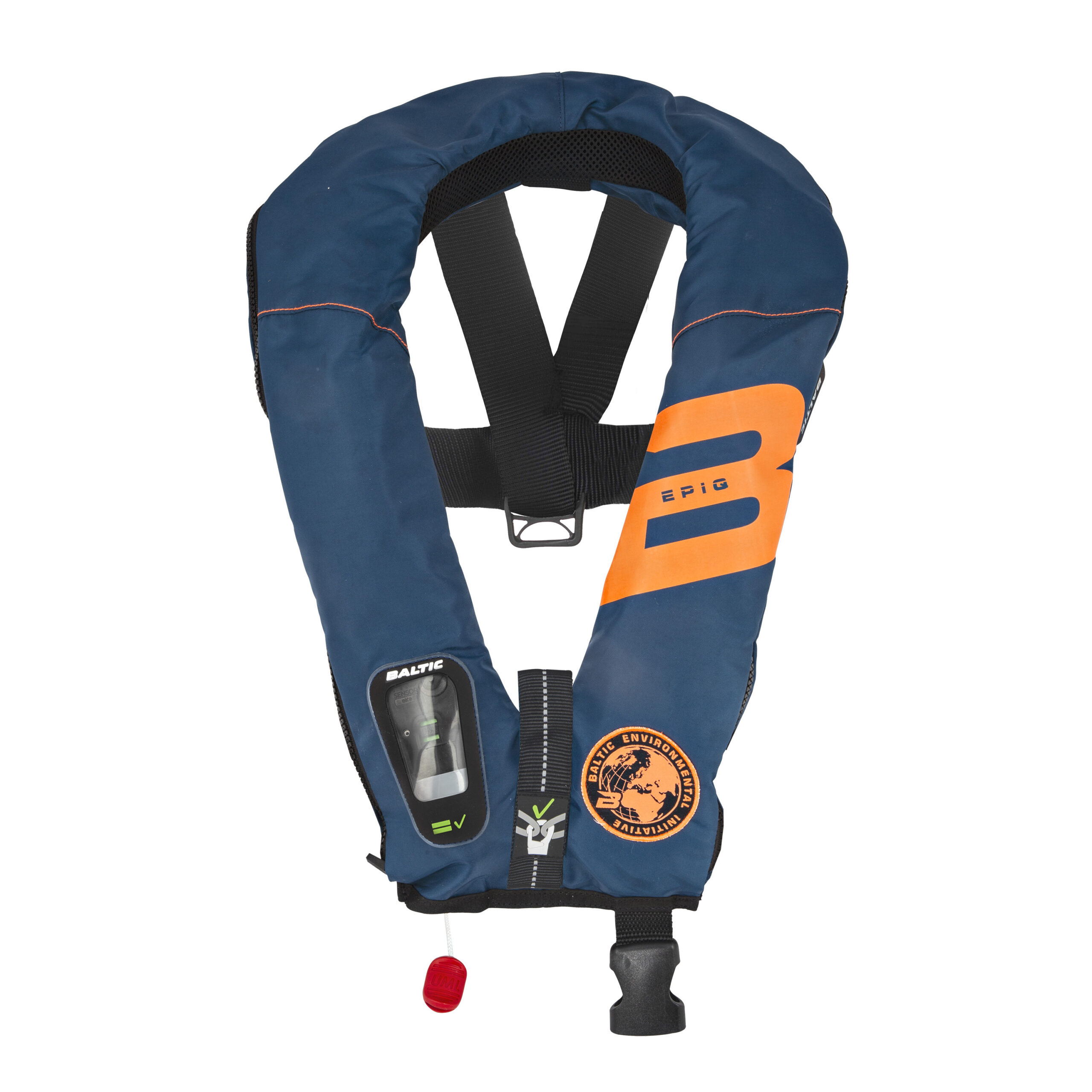
EPIQ E.I 165 AUTO HARNESS LIFEJACKET

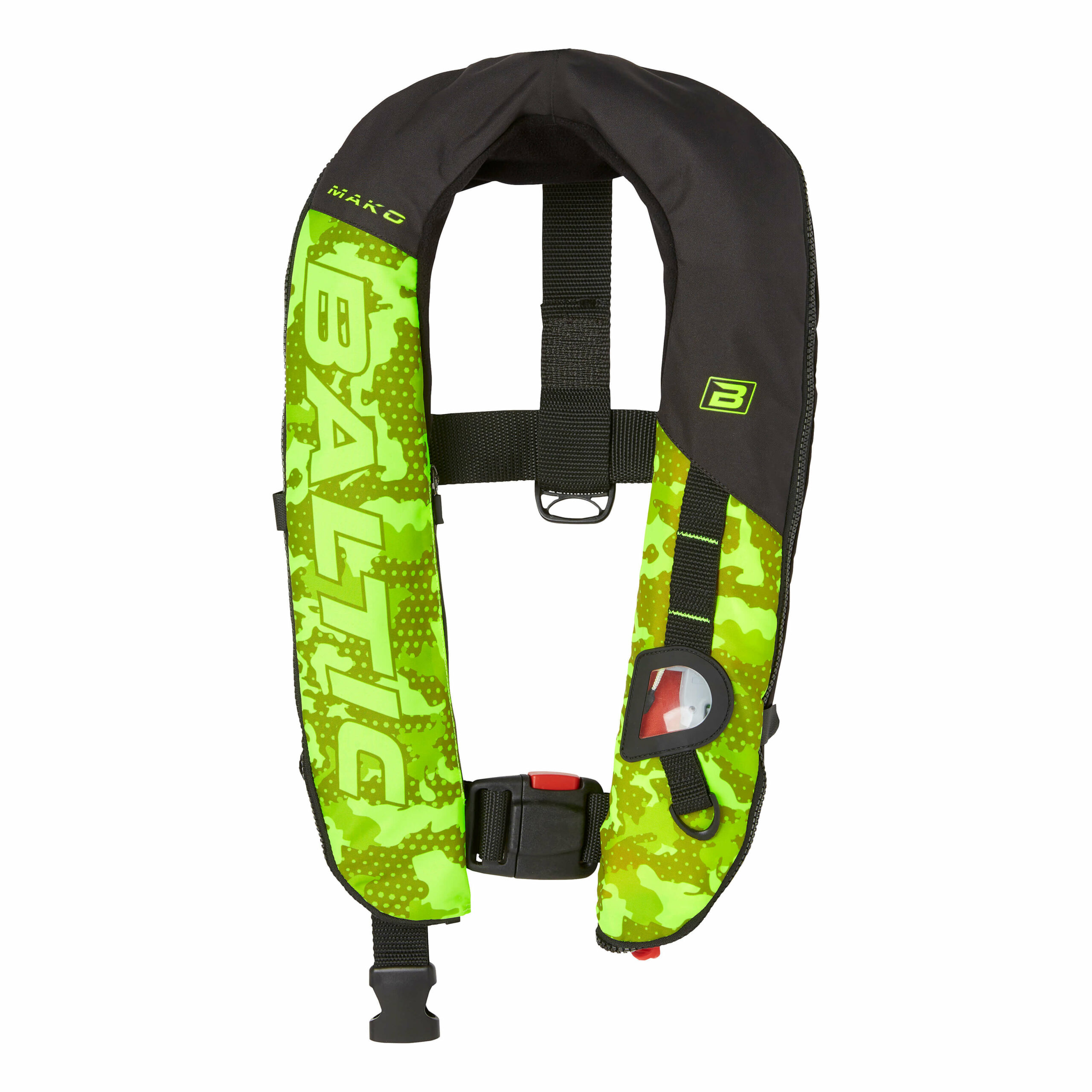
MAKO LIFEJACKET

Posted on

FLOTATION CLOTHES FOR WARMTH AND SAFETY ON THE WATER

En man går på bryggan med en flytväst.

How to choose the right flotation clothing

Choosing the right flotation clothing makes a big difference for both safety and your experience on the water. Whether you’re fishing, sailing, or enjoying a day on a motorboat with your family, flotation clothing provides the right combination of warmth and buoyancy. A flotation suit helps keep your body temperature stable if you end up in cold water, while a flotation jacket or vest mainly keeps you warm when you’re on land or in the boat. This way, you get both safety and comfort, wherever you are.

Flotation Suit

A flotation suit covers the entire body, offering both warmth and buoyancy, making it essential for longer periods on the water or when there’s a risk of falling in. It’s approved according to EN ISO 15027-1 for thermal protection. Tests show that body temperature drops by only 1.1°C on average over two hours in 10°C water – a factor that can be critical for survival.

Note: A flotation suit does not automatically turn an unconscious person into a safe position in the water. That’s why we recommend always using it with an inflatable lifejacket to help keep the wearer in a safe position.

FLOTATION JACKET

A flotation jacket is lightweight and flexible, making it ideal for active days on the water. It keeps your upper body warm on land or in the boat, while also providing reliable buoyancy if you end up in the water. The jacket is a great choice when you need comfort and mobility without compromising safety.

FLOTATION VEST

A flotation vest is light and comfortable, making it ideal for active days on the water. It helps keep you warm and provides buoyancy if you fall into the water, while allowing you to move freely on land or in the boat.

Note: All flotation clothing is classified as buoyancy aids, not life jackets.


Fit, Care, and Durability

For best performance, flotation clothing should fit well, but not be too tight. Try it on with the clothes you plan to wear underneath.

Rinse the clothing in fresh water once a year or after getting wet. Hang to dry completely and store in a dry place, protected from direct sunlight. Do not tumble dry. Check regularly that the materials and flotation elements are in good condition so it continue to function properly.

With the right flotation clothing, you get both safety and comfort all year – on the water, in the boat, or while fishing.

    Posted on

    HOW TO CHOOSE THE RIGHT LIFEJACKET FOR YOUR DOG OR CAT

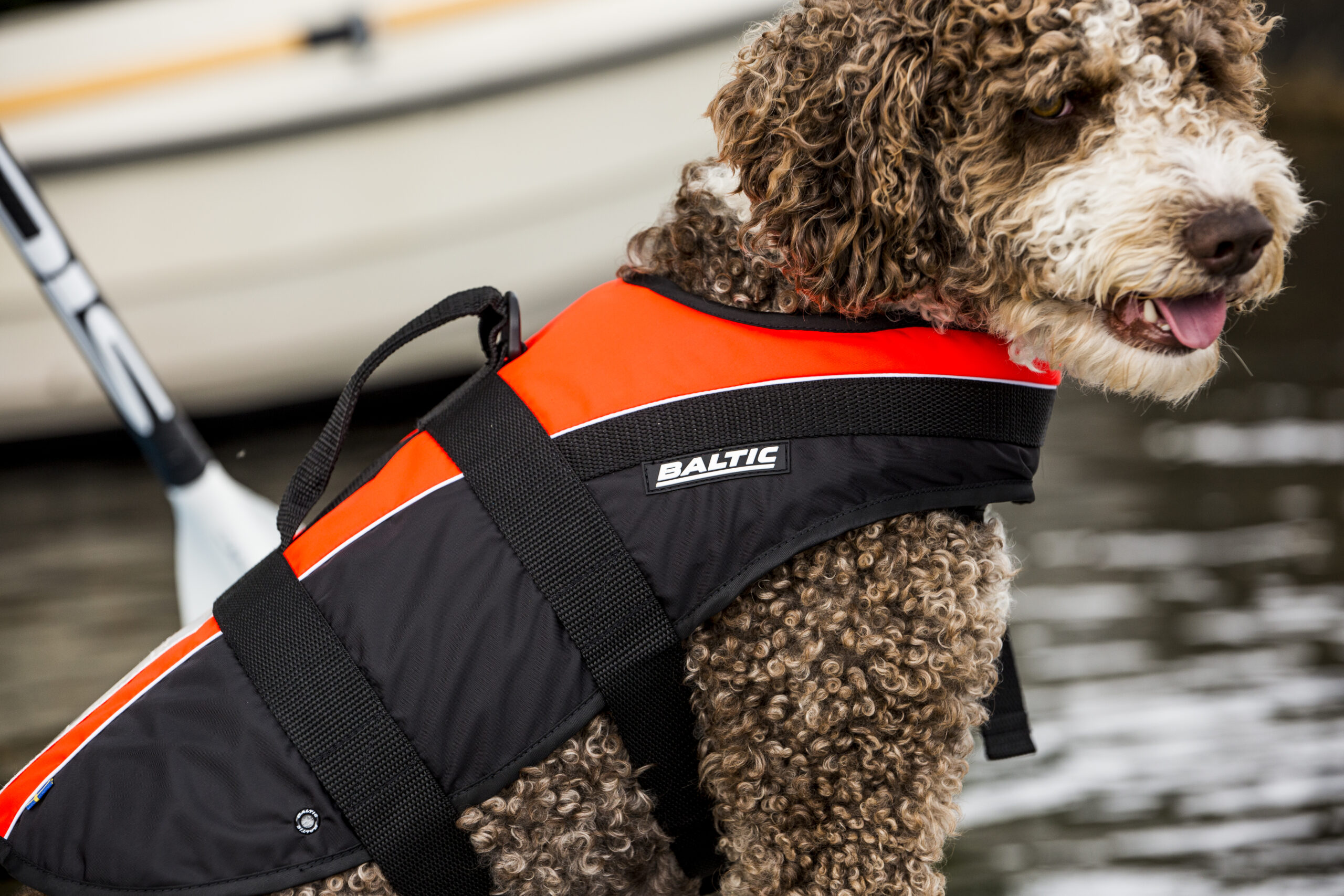
    En brun hund med en flytväst

    How to choose the right lifejacket for your pet

    Summer and warm days invite fun water adventures with our four-legged friends. But whether you’re by the lake, the sea, or out in the archipelago, safety should always come first. A lifejacket for your dog or cat is a smart and reliable way to keep your companion protected when it’s time to swim or go boating.

    Why does my dog or cat need a lifejacket?

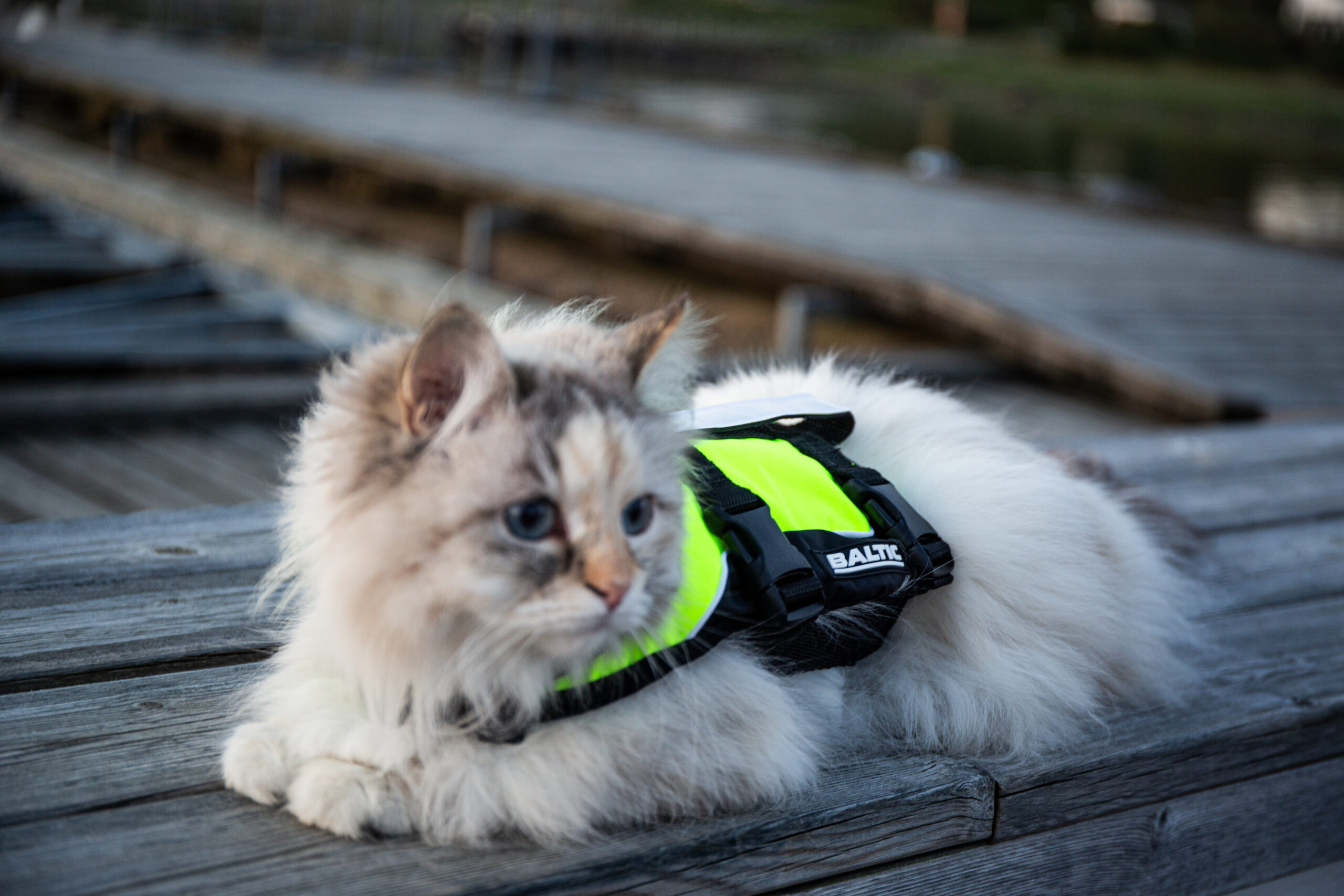
    Many dogs love to swim and are quite good at it, but just like us, they can get tired or find themselves in tricky situations where they need help. Cats are usually less familiar with water, and for them, a lifejacket is especially important to avoid stress and danger. A lifejacket helps your pet stay afloat and lets both of you feel safe out on the water.

    What should I consider when choosing a lifejacket?

    • Fit: The lifejacket should fit well and feel comfortable, without causing any irritation or being too loose. It’s a good idea to measure both your pet’s weight and chest size to find the right fit.
    • Buoyancy: It’s important that the lifejacket provides enough support in the water, tailored to your pet’s weight and swimming ability. A jacket that is too small or doesn’t offer enough buoyancy can do more harm than good.
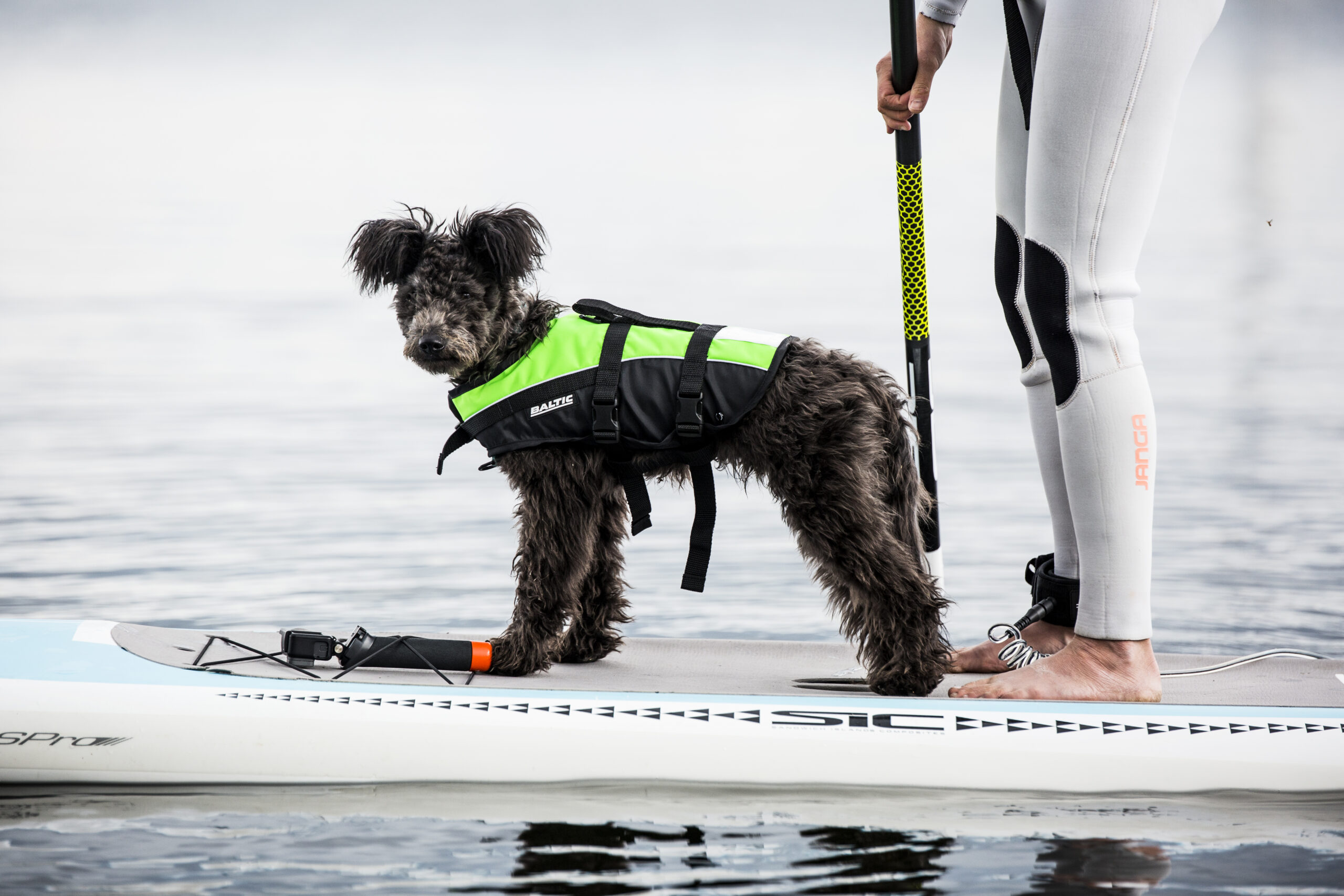
    • Visibility: Choose a lifejacket in bright colors and preferably with reflective details, making it easier to spot your pet from a distance.
    • Handle: A jacket with a handle on the back is very practical when you need to quickly lift your pet out of the water.

    How to get your pet used to wearing a lifejacket

    Wearing a lifejacket can feel unusual for both dogs and cats. Start by letting your pet try on the jacket calmly at home, and give lots of gentle encouragement and treats. Once your friend feels comfortable, you can take the next step and try it out together in shallow water.

    A black dog wearing a green life jacket stands on a SUP board.
    A cat wearing a life jacket is resting on a dock.
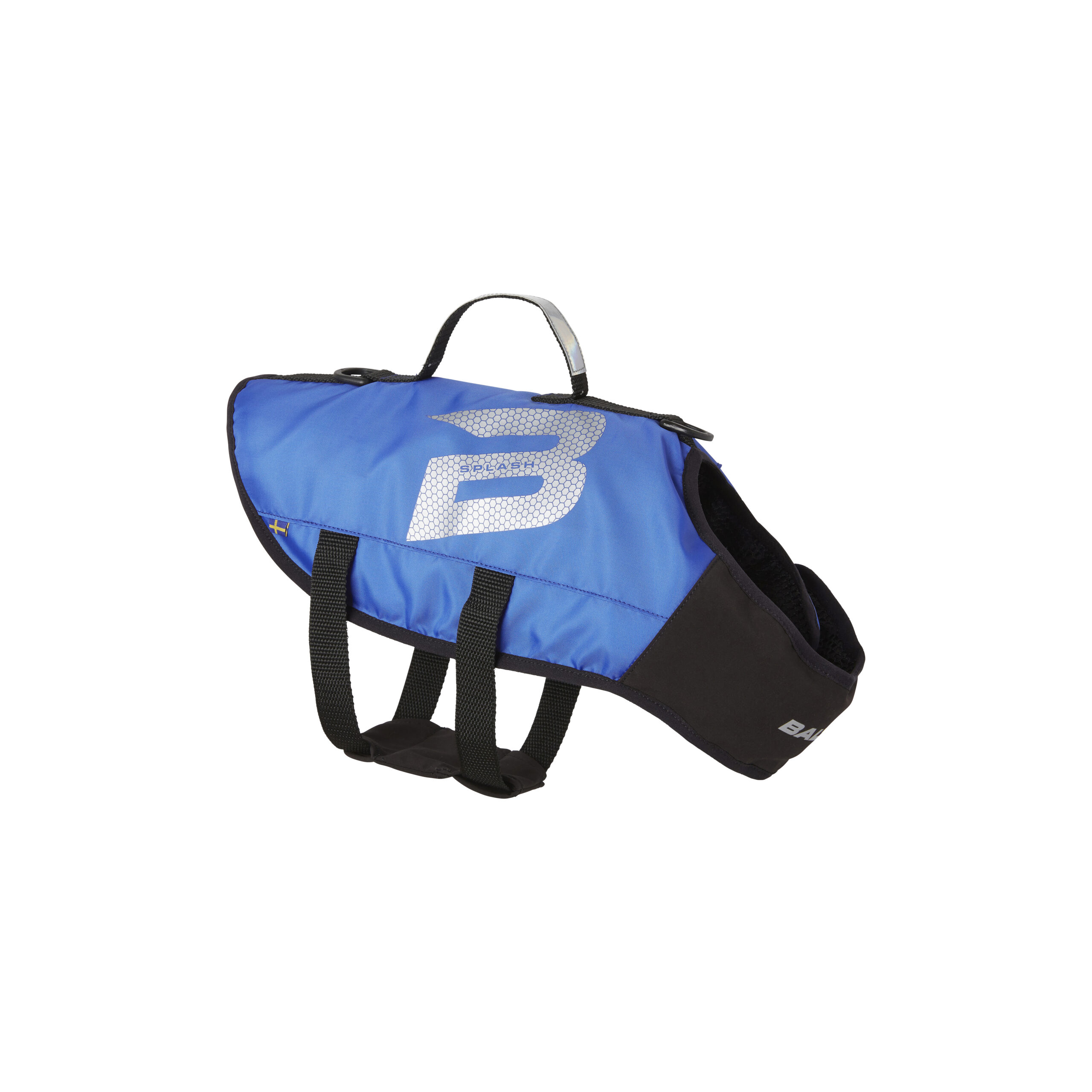
    Splash Buoyancy aid

    SPLASH PET BUOYANCY AID

    MAJA CAT BUOYANCY AID

    Mascot Buoyancy aid

    MASCOT DOG BUOYANCY AID

    Posted on

    THE RIGHT BUOYANCY AID FOR KAYAKING

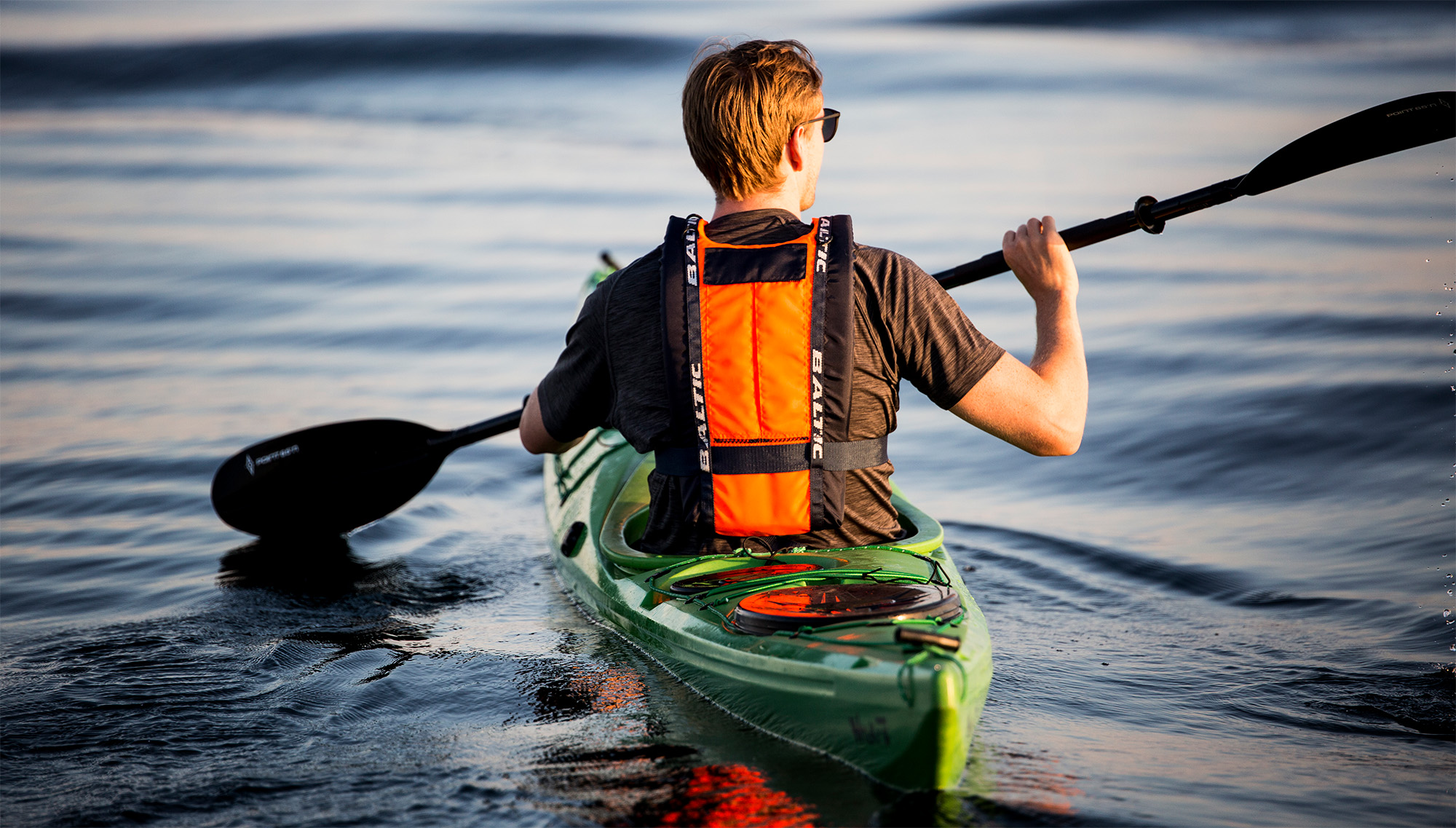
    Man paddlar kajak på stilla vatten.

    Choosing a buoyancy aid for kayaking

    Finding the right buoyancy aid is essential for both safety and comfort, whether you’re gliding across calm waters or heading into more challenging conditions. With so many styles, sizes and colors to choose from, it’s not always easy to know what to look for. Here are a few helpful tips to guide you.

    Purpose and Use

    It’s important to choose a buoyancy aid specifically designed for kayaking. This ensures freedom of movement and flexibility around the shoulders – key for safe and effective paddling.

    Safety

    All Baltic buoyancy aids meet the basic requirement of 50N, which is enough to keep an adult afloat in normal conditions. Some kayak models offer up to 70N for different water environments. Be sure to check the exact Newton rating to make sure it’s suitable for your needs.

    For children who cannot swim, a 100N lifejacket is always recommended to ensure safety on the water.


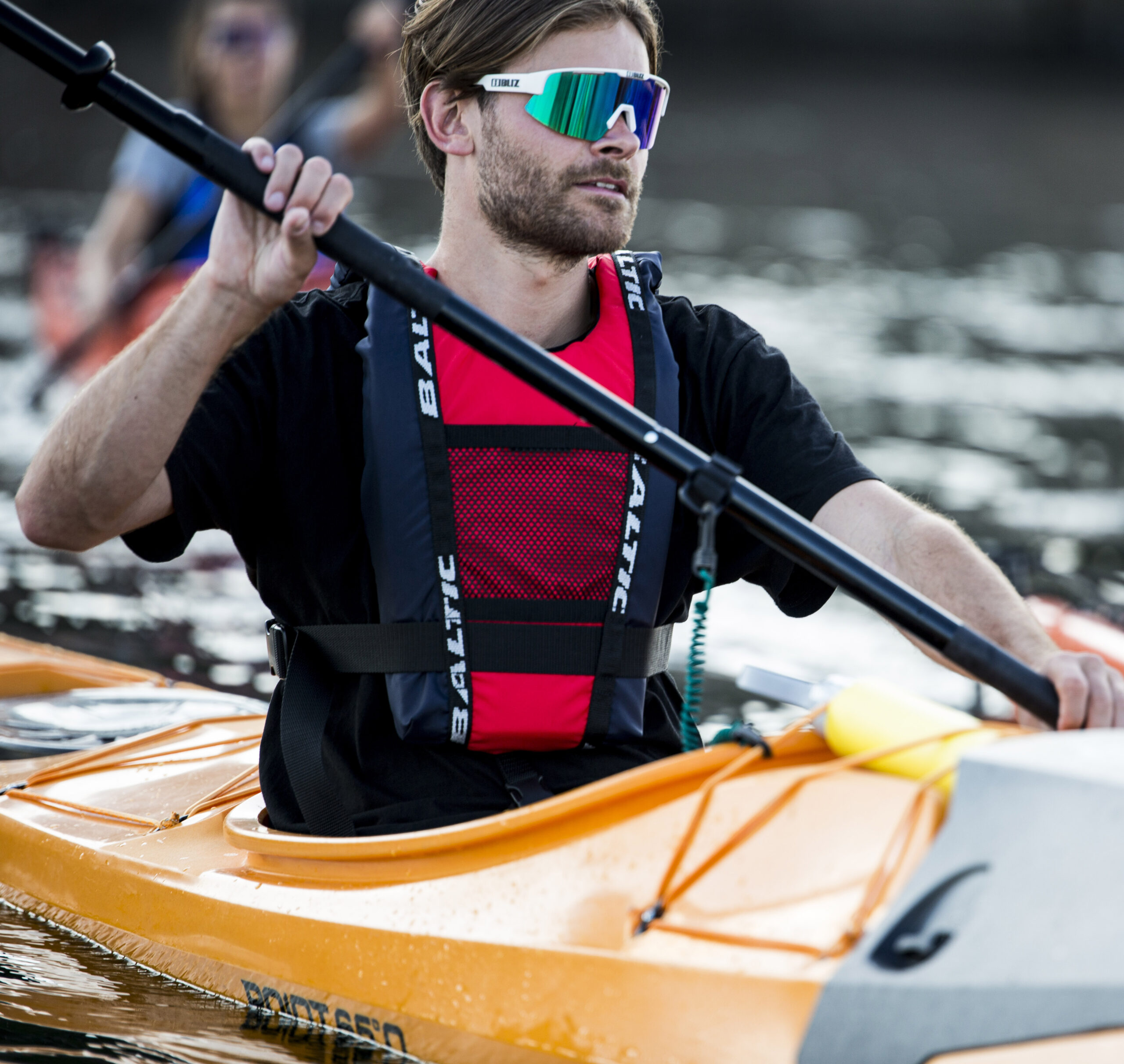
      A man wearing sunglasses paddles a kayak on the water.


      Expert tips for your next paddle adventure

      We know that having the right gear is only part of what makes paddling safe and fun. That’s why we had a quick chat with Emil from lekmer kajak & SUP, a kayak enthusiast and experienced paddler, who shared his best advice for a safe and memorable time on the water.

      What is the most important thing to think about before heading out in a kayak?

      Having the right equipment and being prepared for anything that might come up. Always check the weather forecast to avoid difficult or dangerous conditions, and most importantly, remember to enjoy the experience.

      What is your approach to clothing and gear?

      I want to be able to solve problems on my own, so I always make sure to bring what I need to get back to help or make it home. What you need depends on the trip — paddling around Kungsholmen is very different from a longer outing in the archipelago.

      Besides the essentials like kayak, spray skirt, buoyancy aid and paddle, I recommend bringing a dry-packed change of clothes, plus snacks and something to drink. Dress for the weather and keep your phone in a waterproof case inside your buoyancy aid or close to your body so you can reach it even if you end up in the water.


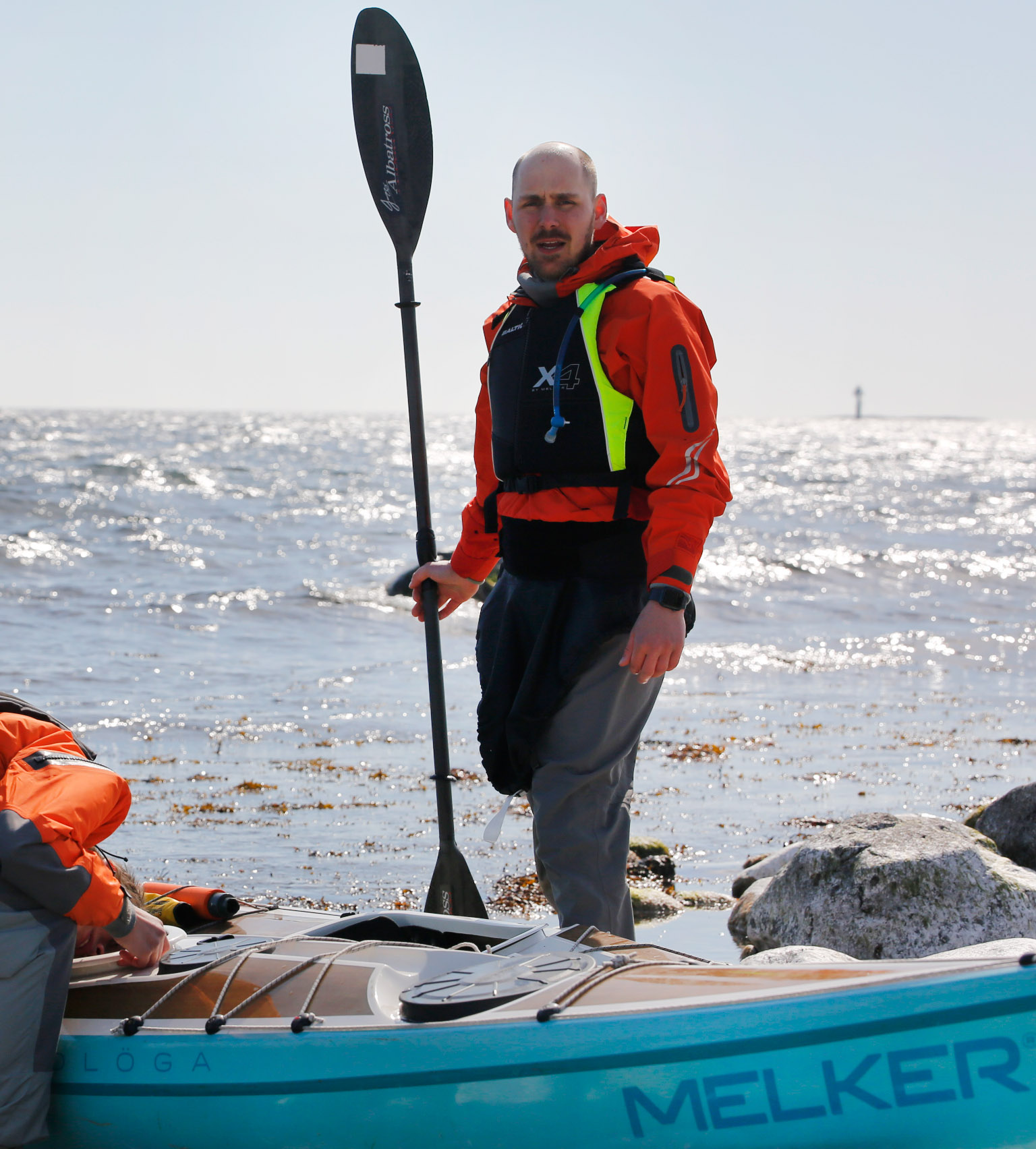
        A man stands by the water’s edge with a paddle in hand next to his kayak, ready to head out on a paddling adventure.
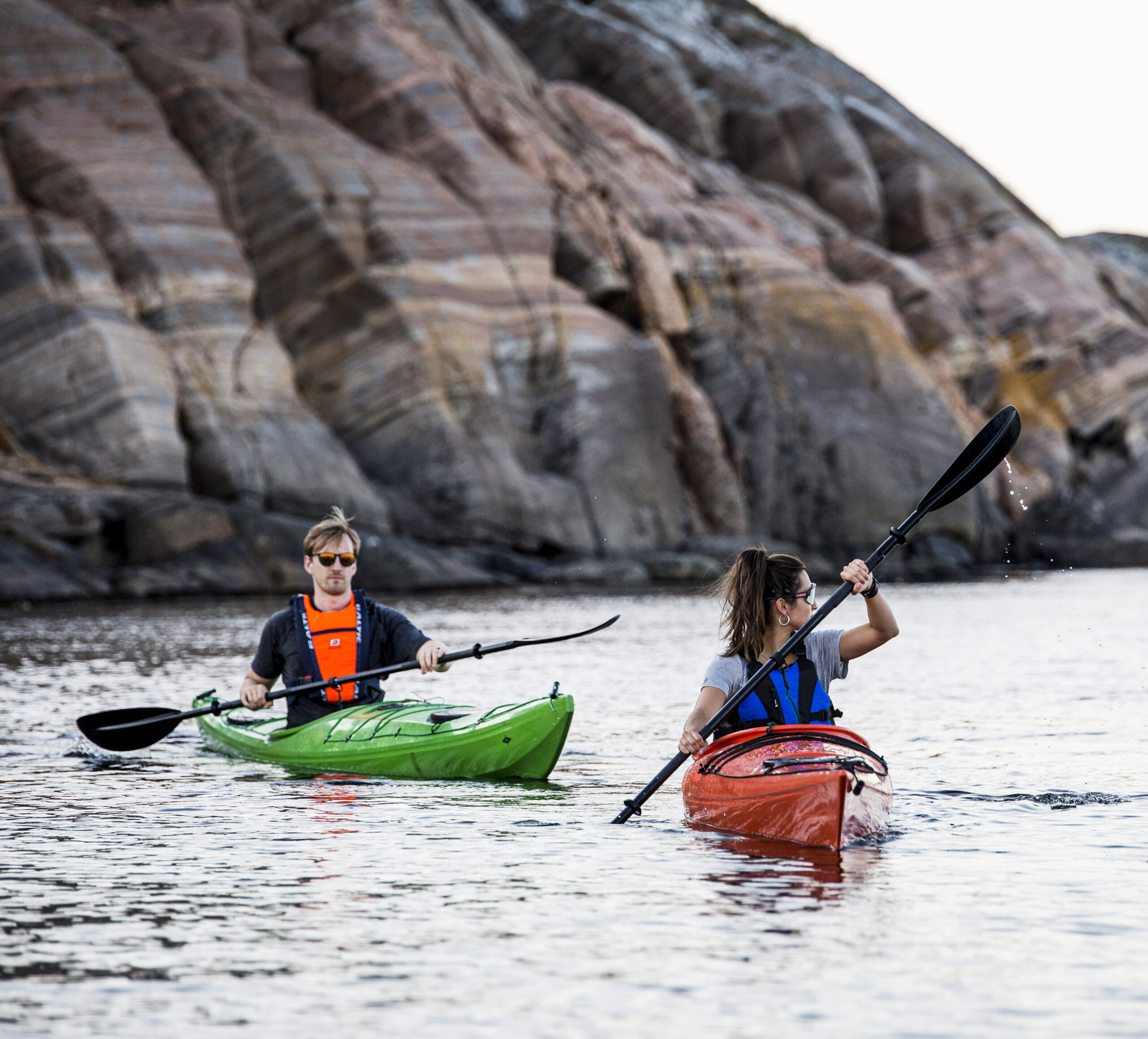
        A woman and a man paddle separate kayaks on open water on a calm day.

        FIT

        A good fit is essential, no matter what kind of paddling you do. Soft foam and simple adjustments make it comfortable to wear for long periods.

        For the best fit, start by loosening the shoulder and waist straps, then tighten them from the bottom up. Avoid over-tightening the shoulder straps to maintain mobility.

        Features

        Just like a car, you can go for basic features or choose extras depending on your needs. Here are some useful ones to look out for:

        • Pockets: For storing snacks or your phone
        • Hydration pocket: Large back pocket for a water reservoir, with D-rings for the hose
        • Attachment point: For a knife or light
        • Crotch strap – Prevents the buoyancy aid from riding up, especially helpful for children
        • QR harness – A quick-release safety harness

        These features make your buoyancy aid more versatile and suited to your activities. Just remember, the best buoyancy aid or lifejacket is the one you actually wear. So put it on, head out on the water, and enjoy every adventure.

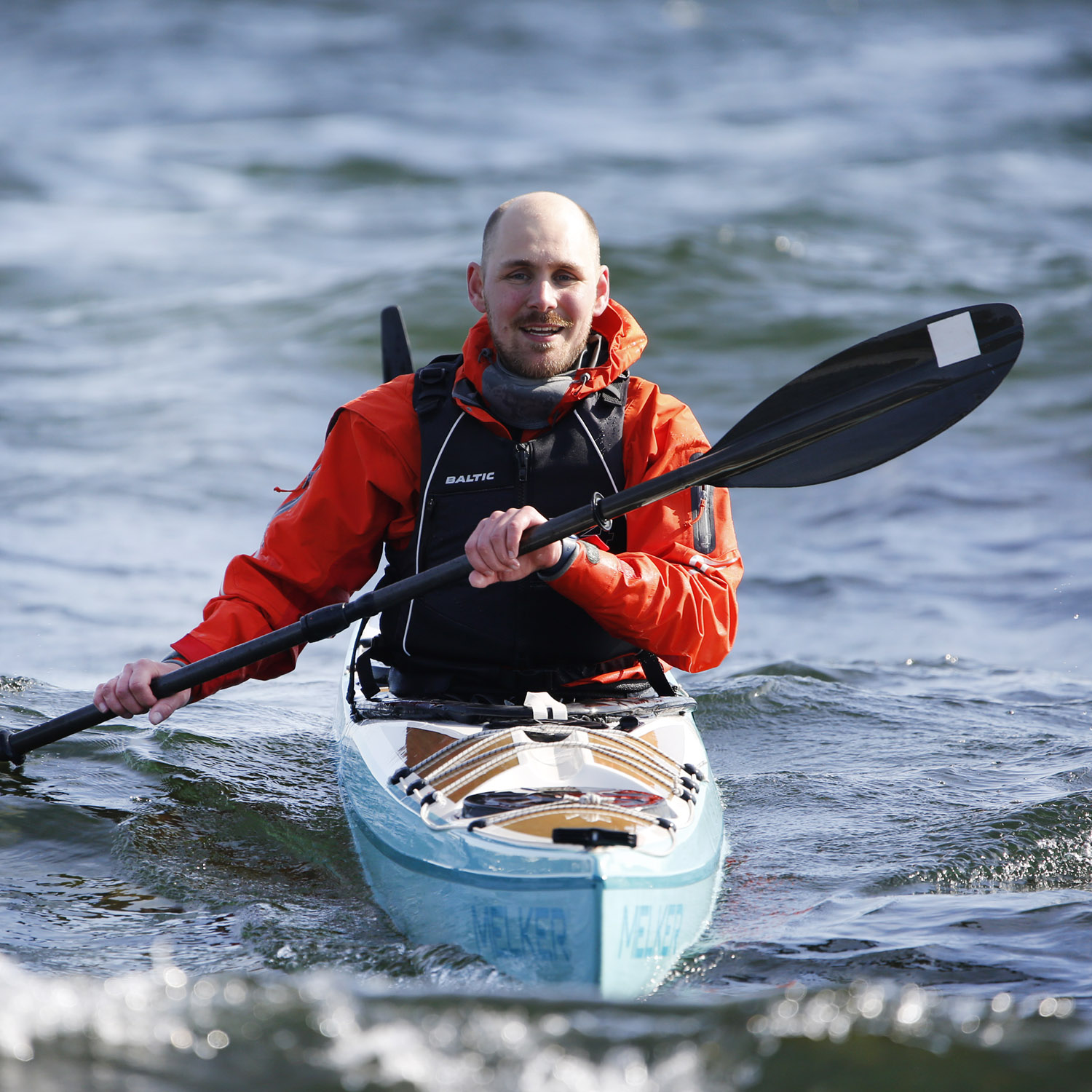
          A man paddles a kayak on the open sea.

          How do you check if the weather is right for paddling?

          I start by thinking about the group’s experience — what can we handle? Then I look at the weather forecast. Strong winds can make things tough, but you can often find shelter behind islands and still have a great time. I mostly use the SMHI and Windy apps, and I always check the conditions on site too.

          What is something that’s easy to forget but should always be packed?

          Snacks! They make the trip more enjoyable and give you a boost if you need it. And remember, paddling with someone else is always safer and more fun. That way, you can help each other if anything happens.

          Do you have a personal tip for a safe and fun paddling trip?

          Knowledge! Water can be tricky and the weather can change fast, so the best thing you can do is keep learning. Take a course, paddle with more experienced friends or join a club or Friluftsfrämjandet. And most importantly — get out there and paddle. Just think ahead, and you’ll reduce the risks and have a much better time.


          Want to follow Emil and get more tips about kayaking and SUP? Check out Lekmer Kajak & SUP här and follow them on Instagram här.

            Posted on

            HOW TO CHOOSE THE RIGHT LIFEJACKET FOR YOUR CHILD

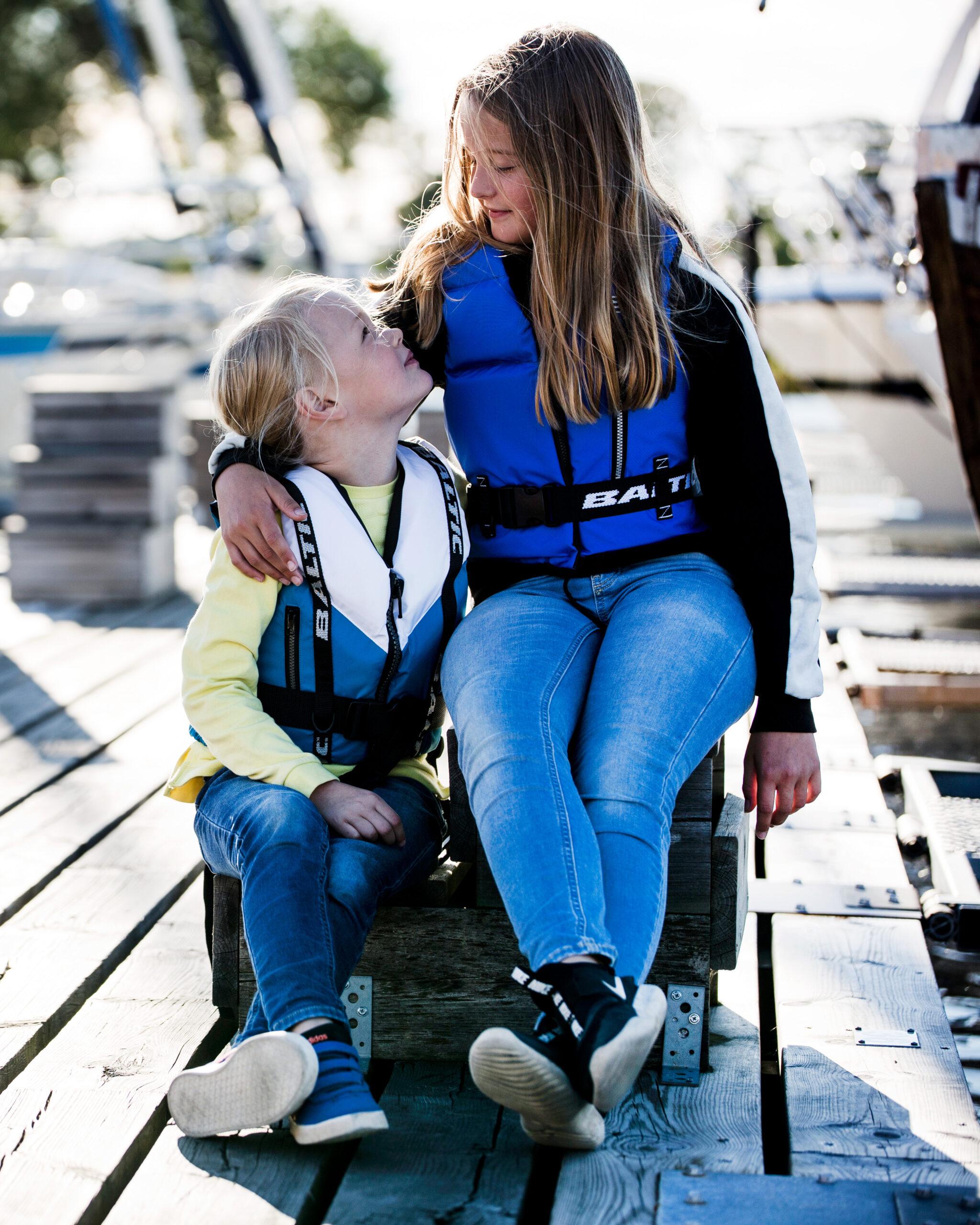
            Barn i orange flytväst med krage vid vattnet.

            How to choose the right lifejacket for a child

            A child’s lifejacket is one of the most important safety features when your child is near or on the water. Whether it’s for beach play, a boat trip, or paddling, the lifejacket should provide both safety and freedom of movement. As a parent, you want to feel confident that your child is protected – a good lifejacket does that.

            Choose the Right Fit for Your Child’s Lifejacket

            For the lifejacket to work optimally, it needs to fit closely around the body. A jacket that is too loose can ride up in the water, especially if the crotch strap is not used. The right fit is crucial for the lifejacket to keep your child safe and afloat.

            Refer to the manufacturer’s size guide, but always try the jacket on your child and check that it doesn’t ride up over their ears when you pull on the shoulder straps. Also, look for reflective details and bright colors that make your child visible in the water. Adjustable straps and soft materials ensure the jacket fits comfortably, even during play or longer periods in the boat.

            Different Types of Child Lifejackets and buoyancy aids

            There are different types of lifejackets and buoyancy aids depending on your child’s age and intended use. A lifejacket designed for rescue is equipped with a collar that helps turn the child onto their back with their face above the water. This makes it an excellent choice for younger children or those who cannot swim, as it provides extra safety in emergency situations. To meet safety standards, these lifejackets must also be made in a highly visible colour and feature reflective patches – important details that make it easier to spot the child in the water, even in poor visibility.

            A buoyancy aid, sometimes called a sailing or activity vest, is a flotation device without a collar. These vests are better suited for children who can swim and are comfortable in the water. They are ideal for activities such as sailing or watersports. However, they do not help the child turn onto their back in the water, but rather provide support while the child is active.

            Always consider your child’s swimming ability and how the vest will be used when choosing the right model.


            Frequently Asked Questions About Child Lifejackets

            How do I know if the lifejacket fits?
            Try the jacket on your child – it should fit closely without riding up when you lift the shoulder straps. The crotch strap should always be used. Weight recommendations can be helpful, but the fit is the most important factor.

            When should we replace the lifejacket?
            As soon as the jacket no longer fits properly. Children grow quickly, so it’s important to regularly check the fit, not just the weight.

            What’s the difference between a lifejacket and a buoyancy aid?
            A lifejacket is equipped with a collar and is designed to help the child roll onto their back with their face upwards in the water. This makes it an ideal choice for younger children or those who cannot swim, offering extra safety in emergency situations. To meet safety standards, lifejackets must also be made in a highly visible colour and feature reflective patches – important details that make it easier to spot the child in the water, even in poor visibility.

            A buoyancy aid, such as a sailing or activity vest, does not have a collar. These vests are better suited for children who can swim and are water-confident. They are great for activities like sailing or other water sports. However, they do not assist the child in rolling onto their back if they fall into the water, but they provide support while the child is active in the water.

            Consider your child’s swimming abilities and how the vest will be used to choose the right model.

                When is my child old enough to use an inflatable lifejacket?
                Your child should be old enough to understand and handle the safety features of an inflatable lifejacket, such as not pulling on the cords, and not unscrewing the CO2 cartridge or the inflator. Additionally, your child should be water-confident, meaning they understand what happens if they fall into the water. As a parent, you know your child best, so please consider carefully before making your decision.

                How do I know the lifejacket is working properly?
                Make sure the buckles and zippers are intact and the jacket has no visible damage. It’s a good idea to test the jacket in shallow water at the start of the season.

                Can my child wear a lifejacket over a jacket or Flotation suit?

                We recommend trying the lifejacket both with and without a jacket before purchasing, to ensure it fits correctly. Always make sure the lifejacket is worn on the outside so it stays visible, and to ensure that an inflatable lifejacket can fully inflate and isn’t blocked.

                Which type of lifejacket or buoyancy aid is best for boat trips?
                It depends on your child’s age and swimming ability. For younger children, a lifejacket with a collar and crotch straps is best, as it helps the child’s head stay above the water. For older, swimming children, a more flexible jacket may work, as long as it has a good fit and is approved for use on the water.


                    Posted on

                    A SAILING ADVENTURE WITH ERIC AND BIANCA

                    En segelbåt som ligger för ankar.

                    A sailing adventure with Eric and bianca

                    Setting off on a long-distance sailing journey is a dream for many. For Eric and Bianca, it became a reality. After months of preparation, they cast off and embarked on their greatest adventure yet. We had a chat with them about the journey, the challenges, and staying safe at sea.

                    The couple met five years ago and soon began talking about their life goals. Eric had long dreamed of living on a sailboat and sailing around the world, while Bianca – who grew up near the sea but had no sailing experience – initially laughed at the idea.

                    What made you decide to go on a long-distance sailing journey?
                    – After a few years of stressful workdays in central Stockholm, we longed for a simpler and freer life, closer to nature and our passions. We started talking seriously about completely changing our lives, Eric and Bianca explain.

                    “We wanted to live close to the sea, away from the stress of city life, and we began to realize that this was something we could actually do.” – Bianca

                    In the spring of 2023, they bought their first sailboat. After a summer of renovations and coastal sailing, they knew this was the life they wanted. In the summer of 2024, they set sail from Nynäshamn with the Mediterranean in sight.

                    How did it feel to leave land for the first time?
                    – It felt completely unreal. We were nervous, excited, and full of anticipation. Just the two of us onboard our floating home, heading out on the greatest adventure of our lives – a dream come true, says Bianca.

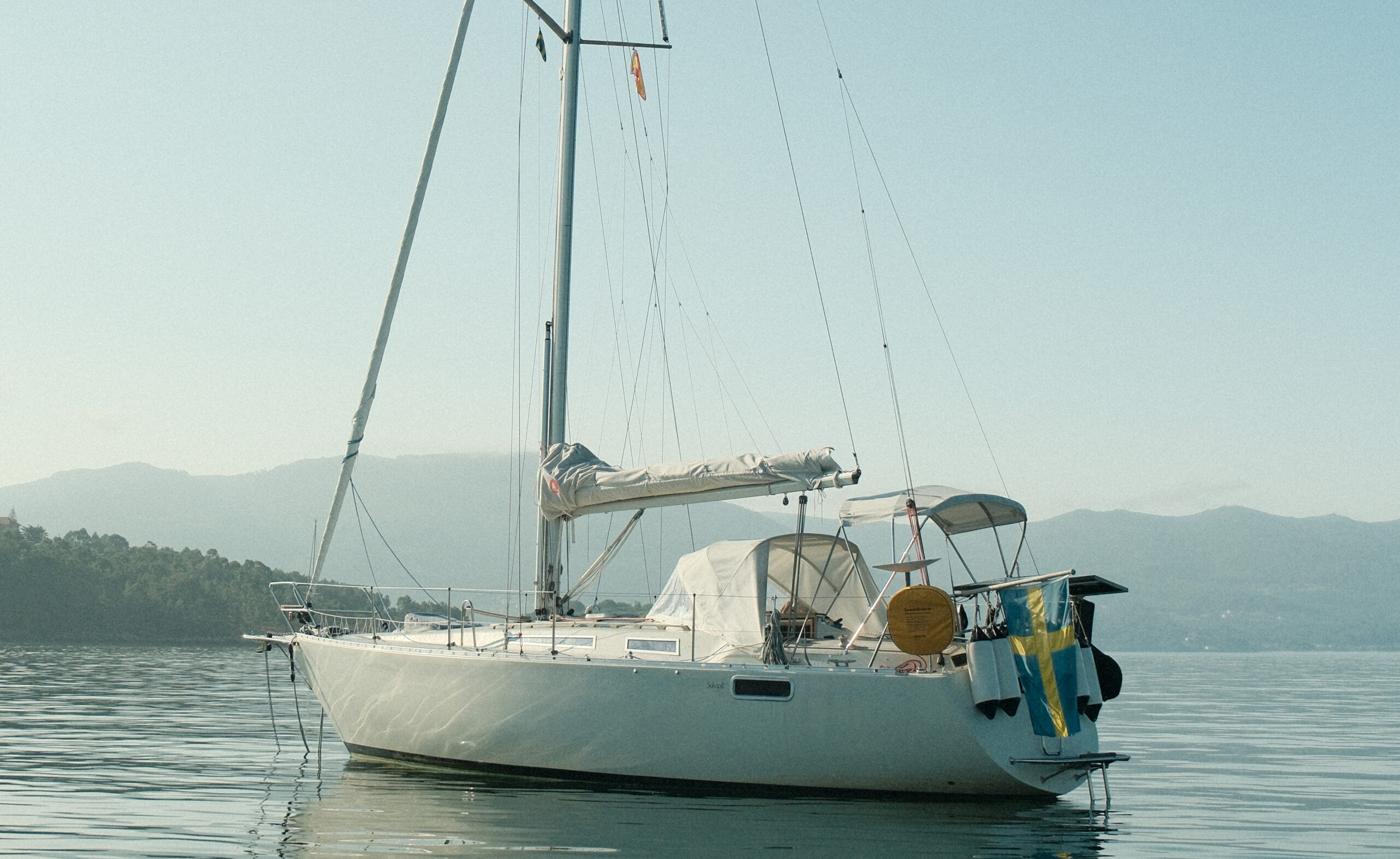
                      A sailboat is anchored in the Mediterranean.


                      Safety onboard

                      Safety is the number one priority at sea. Eric and Bianca always check weather forecasts, avoid unnecessary risks, and carefully plan each leg of their journey.

                      When you sailed through the north sea and the English Channel, what was the most important to consider?
                      – Tides and currents were a big deal. We had to time our arrivals and departures from harbors carefully and be aware of other hazards. Along the northern coast of Spain and Portugal, we closely followed reports of orca attacks on sailboats and took all the recommended precautions, they explain.

                      What´s your view on life jackets during a long sailing trip? 
                      – It’s super important to have life jackets that are comfortable and don’t restrict movement. We have a rule to always wear a safety harness on deck, especially when sailing alone or at night.

                      “The right equipment allows us to stay calm in tough situations.” – Eric

                      Have you ever been in a situation where safety equipment was crucial?
                      – We’ve never been in immediate danger, but knowing we have the right equipment allows us to stay calm in difficult situations. In that sense, it has been crucial for us, say Eric and Bianca.

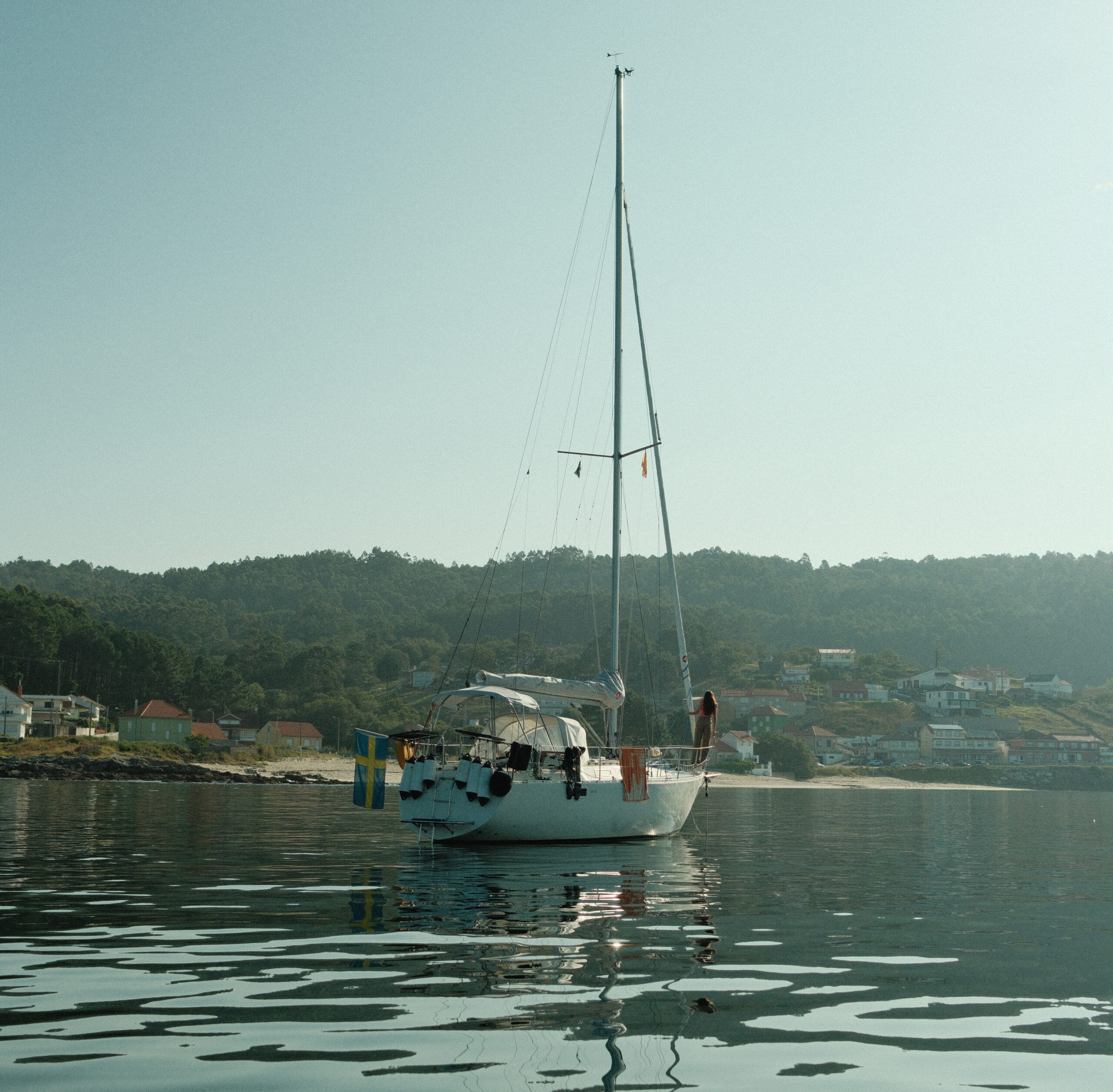
                        A sailboat is anchored in the Mediterranean.
                        A guy and a girl sitting on a boat taking a selfie with the sea in the background.


                        PREPARING FOR THE JOURNEY

                        Setting off on a long voyage requires thorough preparation. The boat needs to be properly equipped, sailing and navigation skills must be in place, and the right mindset is essential. For Eric and Bianca, it took just a year from buying the boat to departure – despite having no prior sailing experience.

                        What were the biggest challenges before setting sail?
                        – There was so much to fix on the boat and so much to learn. At times, it felt overwhelming, and we questioned whether we could really do it. The preparation process was mentally tough, they admit.

                        What do you pack for a long sailing journey?
                        – Since we had already been living on the boat for a year before setting off, we had most of what we needed onboard. But the most important things are safety equipment, first aid supplies, clothes and shoes for all weather conditions, a waterproof sailing suit, extra food, water, and diesel, say Bianca and Eric.

                        Life at sea

                        Days at sea are a mix of peaceful sunset sailing and intense hours battling rough waters.

                        What has been the biggest challenge of life at sea?
                        – Creating routines when every day looks different. It can also be tough missing the comforts of land. The highs and lows are extreme – when things get tough, they are really tough, but when everything falls into place, there’s nothing better. The advantages of this free, nature-connected lifestyle always outweigh the downsides, they say.


                          A girl stands on a sailboat, gazing out at the sea.


                          THEIR BEST ADVICE

                          For Eric and Bianca, long-distance sailing has been more than just a journey across the sea – it has been a journey of personal growth. Through challenges and unexpected situations, they have learned patience, resilience, and the importance of trusting both themselves and each other.

                          What´s your best advice for someone dreaming of a long sailing journey?
                          – You never feel 100% ready to set sail. You just have to take the leap. Be open to learning along the way and remember that you can’t prepare for everything, say Eric and Bianca.

                          Want to follow Eric and Bianca’s journey? You can find them on Instagram here and here, and on Youtube here.

                            Posted on

                            INFLATABLE LIFEJACKETS

                            Två personer med flytvästar står i en båt på havet.

                            How an inflatable lifejacket works

                            An inflatable lifejacket is a reliable safety device – lightweight, comfortable, and designed to keep you afloat when you need it the most. But how does it actually work? Here, we’ll go through the mechanism behind inflatable lifejackets, why regular servicing is important, and how you can ensure your lifejacket is always ready for use.

                            HOW AN INFLATABLE LIFEJACKET IS ACTIVATED

                            Unlike traditional buoyancy aids, inflatable lifejackets are compact until needed. The activation occurs in two ways:

                            • Automatic inflation – The lifejacket fills with air when it comes into contact with water. A water-soluble trigger releases carbon dioxide (CO₂) from a gas cylinder, rapidly inflating the jacket.
                            • Manual inflation – The lifejacket can also be activated by pulling a cord, puncturing the gas cylinder and inflating the jacket with air.

                            Once inflated, the lifejacket provides enough buoyancy to keep your head above the water surface, ensuring your safety in an emergency situation.

                            An inflatable lifejacket that is inflated, with arrows pointing to the different parts of the vest.
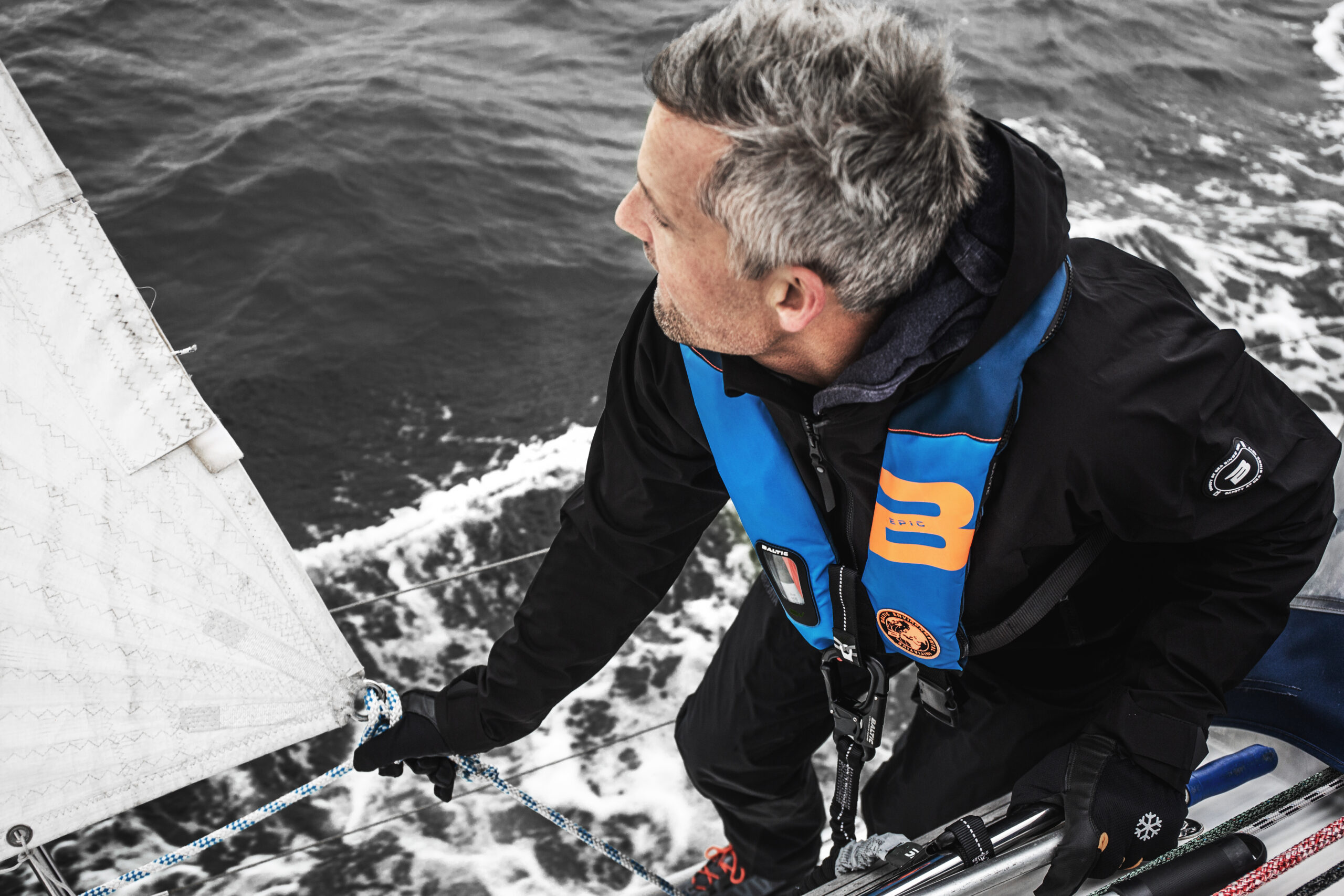
                            En man sitter på en segelbåt med en blå uppblåsbar flytväst på sig.


                            WHY REGULAR SERVICE IS IMPORTANT

                            An inflatable lifejacket is only safe if it works as it should. Over time, components such as the gas cylinder, trigger mechanism, and outer fabric can wear out. To ensure your lifejacket is in good condition, you should:

                            • Service it annually to check for leaks, wear, and ensure the inflation mechanism is working.
                            • Perform a quick self-check between uses – inspect the gas cylinder, expiration date, trigger, and ensure the fabric is intact.
                            • Store the lifejacket in a dry place, away from direct sunlight, to extend its lifespan.

                            DO YOU NEED A NEW LIFEJACKET?

                            If your lifejacket is old, damaged, or no longer fits properly, it might be time to upgrade. Explore our range of inflatable lifejackets for the highest safety and comfort.

                            Poseidon uppblåsbar flytväst blå.

                            POSEIDON AUTO LIFEJACKET

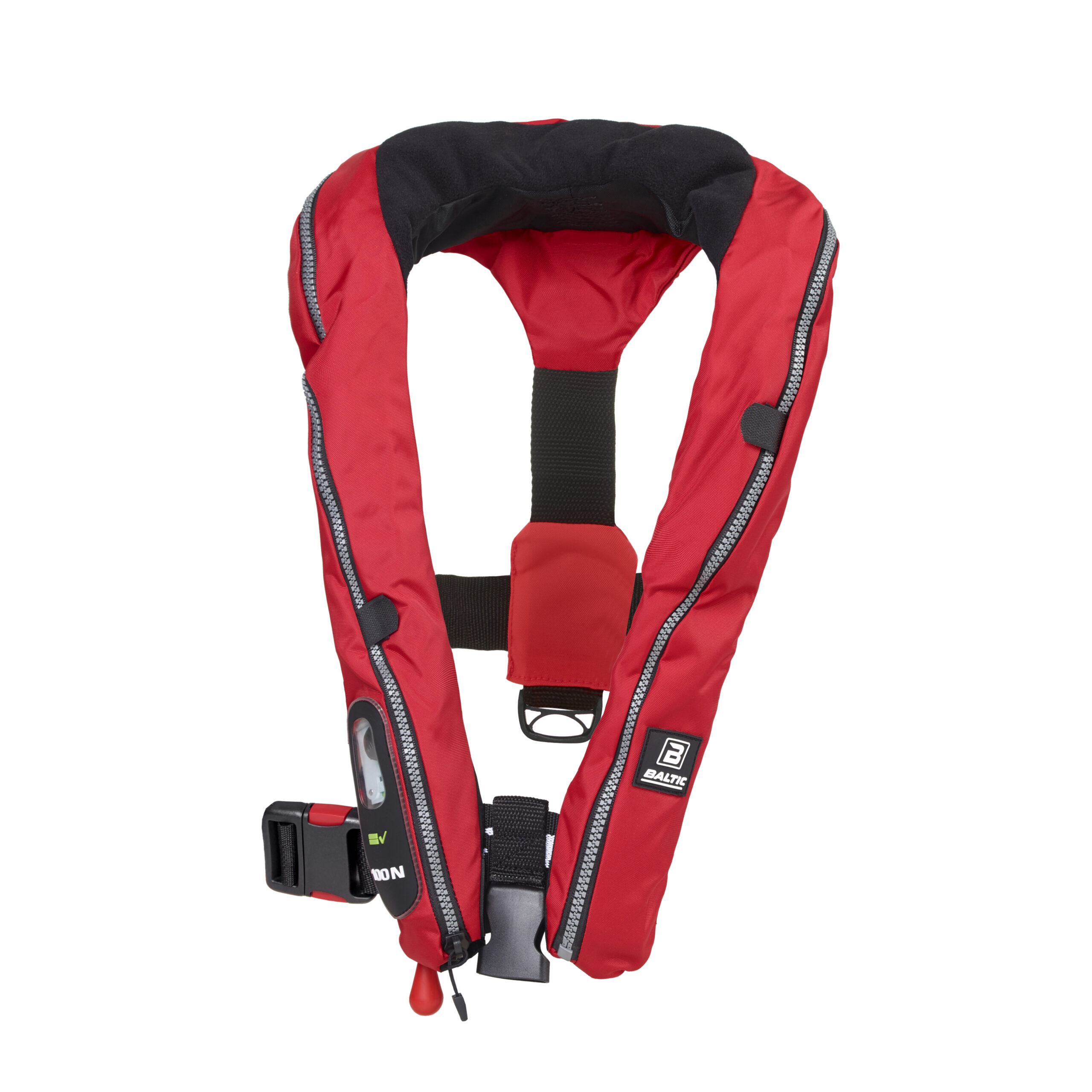
                            Flytväst Compact 100 röd

                            COMPACT 100 LIFEJACKET

                            ATHENA 165N LIFEJACKET

                            WINNER LIFEJACKET

                            Posted on

                            LIFEJACKET MARKETED TO THE COMMERCIAL SECTOR AND OFFSHORE INDUSTRY IS HEREBY RECALLED

                            LIFEJACKET MARKETED TO THE COMMERCIAL SECTOR AND OFFSHORE INDUSTRY IS HEREBY RECALLED

                            Baltics lifejackets Indu Basic M.E.D SOLAS, Baltic 210 M.E.D SOLAS, Baltic 300 M.E.D SOLAS, Legend 165 M.E.D SOLAS and Legend 305 M.E.D SOLAS, are hereby recalled due to a potential risk in the placement of the Buddy Line on the lifejacket.

                            This recall applies to all models mentioned above, both with and without integrated safety harness, certified to the SOLAS standards marketed to the commercial sector and offshore industry and which may have been purchased by direct consumer.

                            The Buddy Line is a 1.5 metre line used by two or more distressed persons to connect themselves to each other. During a routine test of the Buddy Line it showed that the lifejackets air chamber in worst case scenario can be damaged and punctured due to the placement of the Buddy Line.

                            Baltic has developed a replacement kit that is easy to attach to the waistbelt of the lifejacket on all affected models. This replacement kit eliminates the risk of damaging the air chamber if the Buddy Line is used, the function of the Buddy line remains unchanged. There is no risk to the wearer that the main function, inflation of the lifejacket upon immersion in water, will not work.

                            We apologise for the incident and any concern this may cause. Please do not hesitate to contact us if you have any questions, please contact productrecall@baltic.se or +46050636990

                            Posted on

                            SERVICE YOUR LIFEJACKET EASILY

                            En kvinna sitter på en segelbåt och tittar ut.

                            HOW TO SERVICE YOUR LIFEJACKET

                            Regularly servicing your life jacket is crucial for your safety on the water. A well-maintained lifejacket performs as it should when you truly need it. In this guide, we’ll explain why servicing is important, how to easily book a service with us at Baltic Lifejackets, and what you can do yourself to keep your lifejacket in top condition between service intervals.

                            Why is lifejacket service important?

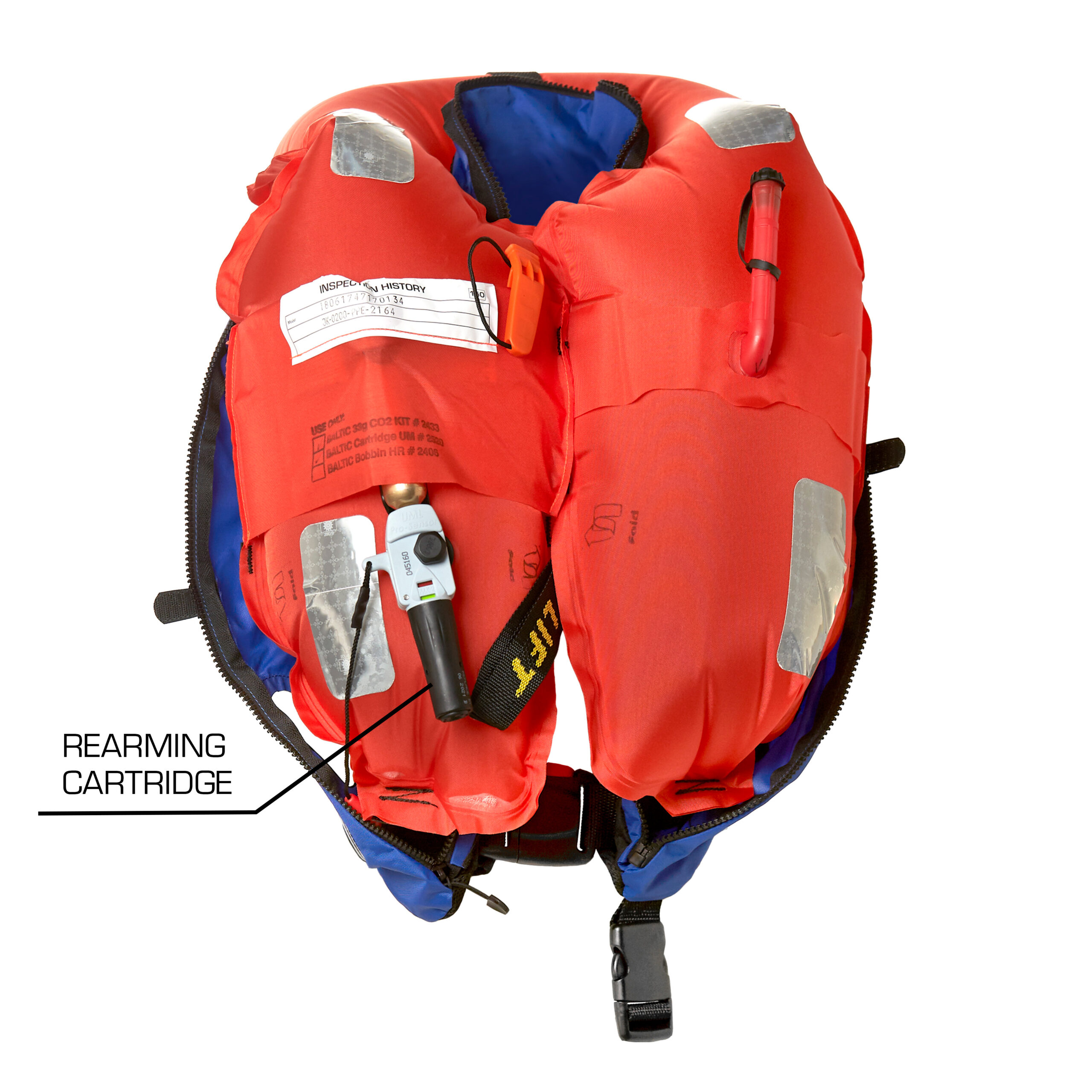
                            Lifejackets are lifesaving equipment that require regular inspection and maintenance to function correctly. Parts such as the rearming cartridge, gas cylinder, and valves can wear out or become damaged over time, affecting their functionality. By regularly servicing your lifejacket, you ensure that it is in the best possible condition and ready for use when needed.

                            How often should you service your lifejacket?

                            To keep your lifejacket in optimal condition, we recommend servicing it once a year. An annual service helps identify wear or damage that could impact the jacket’s functionality and safety.

                            Easily service your lifejacket with us

                            At Baltic Lifejackets, we offer a straightforward and effective service for your lifejacket. Our experienced staff inspects all critical components to ensure that the jacket functions as it should. You can book your service directly on our website, and after the service, you will receive a report detailing any replacements or actions taken.

                            Keep your lifejacket in top shape

                            To further protect your lifejacket, store it in a cool, dry place, away from direct sunlight and extreme temperatures. Avoid moisture to prevent mold and material degradation. By following these tips and booking your service online with us, you can be confident that your lifejacket is always in the best condition.

                              En räddningsväst som är uppblåst och redo för service.

                              How to check your lifejacket yourself between service intervals

                              While an annual service is essential, you can perform a few simple checks to ensure your lifejacket is in good condition between service intervals. Here are four steps to follow:

                              1. Clean off salt, sand, and dirt: After each use, thoroughly clean your lifejacket to remove salt, sand, and dirt. This prevents damage to the material and extends the jacket’s lifespan.
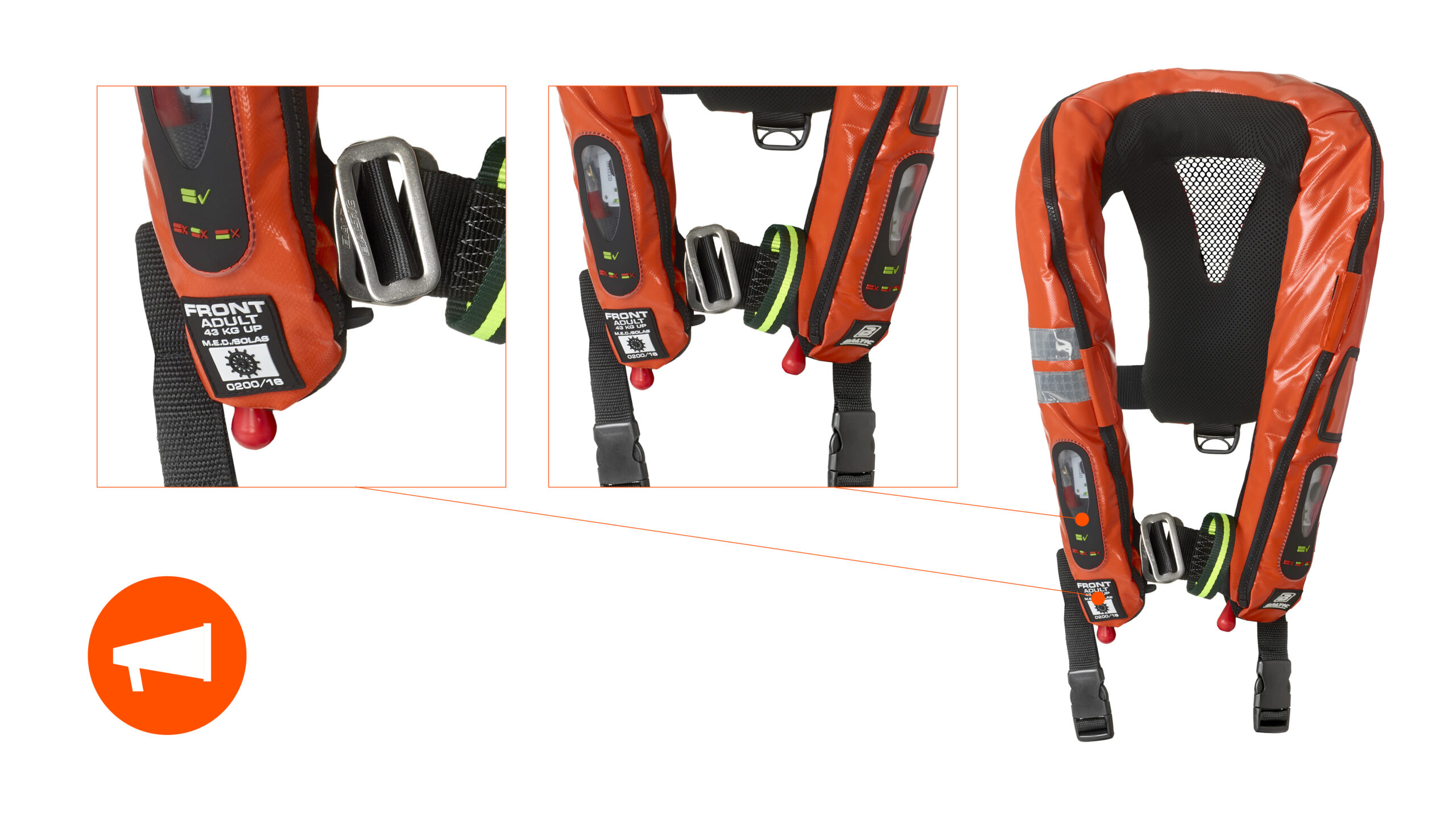
                              2. Check the indicators: Ensure that all indicators and functions are intact and operating correctly. Check if the indicator is green.
                              3. Check the rearming cartridge date: Inspect the expiration date of the rearming cartridge and replace it if necessary. An old or expired cartridge can affect the jacket’s functionality.
                              4. Inspect for wear: Carefully check the jacket for signs of wear, tears, or other damage. Pay special attention to straps and seams to ensure everything is in good condition.